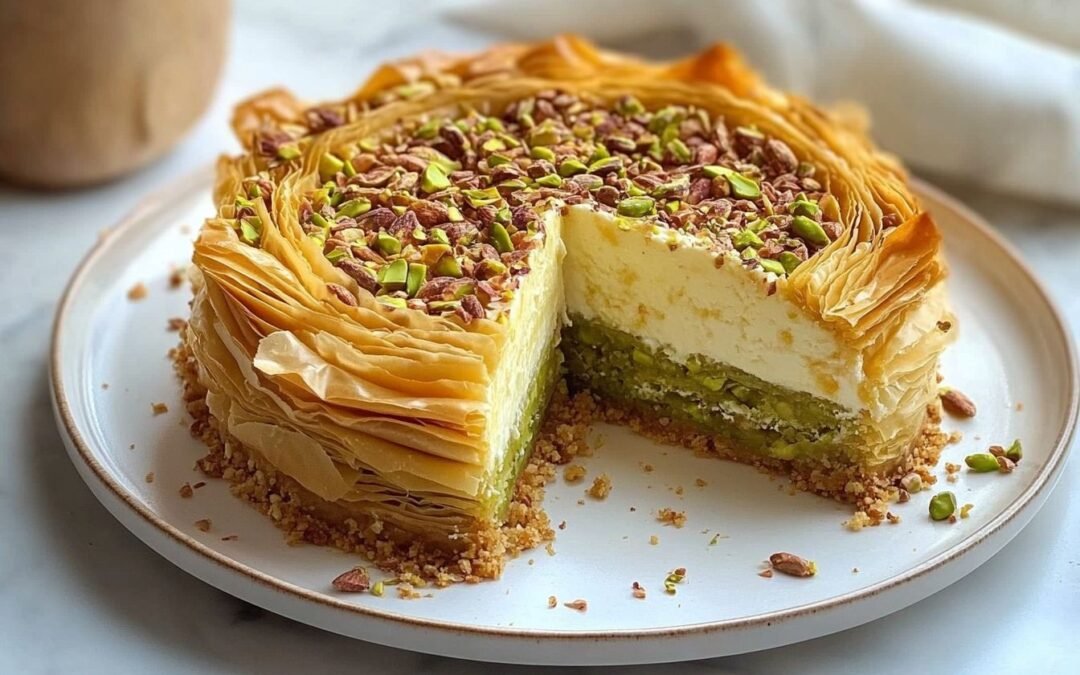
Kunafa with akawi cheese is a traditional Middle Eastern dessert enjoyed for generations. This sweet and savory pastry is made with a crispy, shredded phyllo dough crust filled with a creamy, melted cheese mixture and drizzled with scented sugar syrup. The result is a rich and satisfying dessert, with a perfect balance of sweet and salty flavors.
To make it, you will need a few key ingredients. You will need granulated sugar, water, lemon juice, orange blossom water, and rose water for the scented sugar syrup. The cheese filling is made with Shelal or Shellala/Meshalela cheese and Akkawi Tchiki cheese. Finally, the kunafa crust is made with kunafa dough, ghee, scented sugar syrup, and water. Once you have gathered all of your ingredients, you can begin the process of making this delicious dessert.
What Is Kunafa?
Kunafa is a popular Middle Eastern dessert made with shredded phyllo dough, sweet syrup, and a variety of fillings. One of the most popular fillings for kunafa is akawi cheese, a salty and slightly tangy cheese that pairs perfectly with the sweet syrup.
Origins of Kunafa
Kunafa has its roots in the Levant region, which includes modern-day Lebanon, Syria, Jordan, and Israel. It is believed that the dessert was first created in the city of Nablus in Palestine, where it is still a beloved treat today.
Over time, kunafa has become popular throughout the Middle East and beyond, with each region putting its spin on the classic dessert. In some countries, kunafa is made with cream or nuts instead of cheese, while in others it is served with ice cream or fruit.
Kunafa Varieties
While akawi cheese is a popular filling for kunafa, there are many other varieties to choose from. Some of the most popular options include:
- Cream kunafa: This variety is made with a creamy filling that is similar to custard.
- Nut kunafa: This version is filled with a mixture of chopped nuts, such as pistachios or almonds.
- Chocolate kunafa: For those with a sweet tooth, chocolate kunafa is a decadent treat that is sure to satisfy.
Akawi Cheese Basics
Origin of Akawi Cheese
The origins of akawi cheese are not entirely clear, but it is believed to have originated in the Levant region, where it has been a part of the cuisine for centuries. The cheese is named after the city of Acre (Akko) in Israel, where it was traditionally made. Today, akawi cheese is made in many countries, including Lebanon, Syria, and Jordan.
Characteristics of Akawi Cheese
Akawi cheese has a mild, slightly salty flavor and a smooth, creamy texture. It has a low moisture content, which makes it perfect for melting and grilling. The cheese is often used in savory dishes such as kunafa, a popular Middle Eastern dessert made with shredded phyllo dough, syrup, and akawi cheese. It is also used in sandwiches, salads, and pastries.
Ingredients:
Scented sugar syrup:
- 2 cups (400g) of granulated sugar
- 1 cup (230g) of water
- Squeeze of lemon
- 2 tsp of orange blossom water (more or less to taste)
- 1/2 tsp of rose water (more or less to taste)
Cheese filling:
- 500g of Shelal cheese (without the black sesame)
- 300g of akkawi tchiki cheese
Knafeh crust (farkeh):
- 375g of kunafa, fresh or frozen
- 1/3 cup plus 2 tbsp (94g) of melted ghee (or butter)
- 3 tbsp of (60g) scented sugar syrup
- 3 tbsp of (45g) water
- 2 tbsp of (30g) ghee or clarified butter, at room temperature, for cooking the knafeh
- Ground pistachios, for garnish (optional)
How to Make Kunafa with Akawi Cheese?
Prepare the scented simple syrup:
Mix the sugar, water, and lemon juice in a saucepan over medium-high heat. Bring to a boil, then reduce heat and simmer for 10 minutes. Remove from heat and stir in orange blossom water and rose water. Set aside to cool completely.
Desalting the cheese:
In separate bowls, cover both cheeses with lukewarm water. Soak for 2-6 hours, changing the water every 30 minutes to remove excess salt. Alternatively, soak overnight in the refrigerator, changing the water once. Drain the cheeses thoroughly and crumble them together.
Preparing the kunafa crust (farkeh):
- Chose each of these methods:
- Spice grinder method: Grind the kunafa pastry in a spice grinder until it resembles a fine powder. Combine with ghee, cooled simple syrup, and water in a mixing bowl. Mix until well combined and form a clumpy, slightly sticky dough.
- Meat grinder method: Shred the kunafa pastry by hand or in a food processor. In a bowl, combine the shredded kunafa with ghee, cooled simple syrup, and water. Grind the mixture using a meat grinder until clumpy.
Heat a skillet over medium heat. Add the farkeh mixture and toast, stirring constantly, until dry and crumbly. The color should deepen slightly. Transfer the toasted farkeh to a food processor and pulse a few times to break up any large clumps.
Assembling and baking:
Preheat your oven to low broil (around 400°F). Brush a baking pan with ghee. Press most of the toasted farkeh mixture into the bottom of the pan, creating a compact and even layer about ¾ inch thick. Spread the crumbled cheese mixture evenly over the farkeh, leaving a 2-centimeter border around the edge.
Bake the kunafa on medium heat on the stovetop, ensuring the flame only covers half the pan’s bottom to prevent uneven cooking. Alternatively, use the oven’s broil setting, placing the pan on the top rack. Rotate the pan constantly, using tongs and oven mitts, for even baking. Pat the top of the cheese with a clean cloth or paper towel to absorb any released moisture. Continue baking until the edge of the crust turns a deep golden brown and the cheese is mostly melted, approximately 10-15 minutes.
Serve and Enjoy: Remove the pan from heat and let the kunafa rest for a few minutes to allow the cheese to fully melt. Sprinkle the reserved farkeh over the cheese layer to absorb any excess moisture.
Serving Suggestions
- Traditional Style: Serve the kunafa warm with a generous sprinkling of crushed pistachios on top and a drizzle of simple syrup. This is the most common way to serve kunafa and is perfect for those who want to enjoy the classic flavors of this Middle Eastern dessert.
- Ice Cream Topping: For a fun twist on the traditional serving style, try serving your kunafa with a scoop of vanilla ice cream on top. The warm, crispy kunafa pairs perfectly with the cold, creamy ice cream, making for a delicious and refreshing dessert.
- Fruit Compote: If you’re looking for a lighter option, consider serving your kunafa with a side of fruit compote. The tartness of the fruit pairs well with the sweetness of the kunafa, and the combination makes for a refreshing and satisfying dessert.
- Coffee or Tea: Finally, no dessert is complete without a warm cup of coffee or tea to wash it down. Serve your kunafa alongside a hot cup of your favorite beverage for the perfect end to any meal.
Pairing and Accompaniments
Pistachios
Pistachios are a popular topping for kunafa. They add a crunchy texture and a nutty flavor that complements the sweetness of the syrup. You can either sprinkle chopped pistachios on top of the kunafa or mix them with the cheese filling.
Rosewater
Rosewater is a common ingredient in the syrup used to sweeten kunafa. It adds a floral aroma and a subtle flavor that balances the richness of the cheese. You can also sprinkle some rose petals on top of the kunafa for a decorative touch.
Arabic Coffee
Arabic coffee is a traditional beverage that pairs well with sweet pastries like kunafa. Its strong flavor and aroma help cleanse the palate between bites and enhance the overall experience. You can serve the coffee hot or cold, depending on your preference.
Fresh Fruit
Fresh fruit is a refreshing accompaniment to this dessert. It adds a pop of color and a natural sweetness that complements the richness of the cheese. Some popular options include sliced strawberries, kiwi, or mango.
Storage and Reheating Tips
When storing this kunafa, it’s essential to keep it in an airtight container and refrigerate it immediately. You can store it in the refrigerator for up to three days, but it’s best to consume it as soon as possible to maintain its freshness.
To reheat it, preheat your oven to 350°F. Place the Kunafa in a baking dish and cover it with foil. Bake it in the oven for 10-15 minutes, or until it’s heated through. This will ensure that the cheese melts and the pastry is crispy.
Another way to reheat is in the microwave. Put the kunafa on a plate that’s safe for the microwave. Cover it with a damp paper towel. Microwave it on high for 30-45 seconds until it’s warmed through. However, this method may not give you the same crispy texture as the oven method.
It’s important to note that you should not freeze this kunafa as it may affect the texture and taste of the dish. Stick to refrigeration and reheating methods to ensure that you get the best taste and texture out of your kunafa.
Common Mistakes to Avoid
Firstly, ensure the kunafa dough is thawed completely before using it. If the dough is not fully thawed, separating the strands will be difficult, and you may end up with clumps of dough.
When it comes to the akawi cheese, make sure to shred it finely. If the cheese is not shredded enough, it may not melt properly and you may end up with clumps of cheese.
Lastly, be careful not to overbake the kunafa. Overbaking can cause the cheese to become rubbery and the dough to become dry. Keep a close eye on the kunafa and remove it from the oven as soon as it is golden brown.
Conclusion
I must say, after trying kunafa with akawi cheese, I am thoroughly impressed. The combination of sweet and salty flavors is a match made in heaven. The crispy texture of the shredded phyllo dough and the gooey melted cheese create a delightful contrast in every bite.
One thing to note is that this dessert is quite rich, so it’s best enjoyed in moderation. It’s a perfect dessert for sharing with friends and family, as a little goes a long way.
Overall, I highly recommend giving kunafa with akawi cheese a try. It’s a unique and delicious dessert that is sure to impress.
Did you know? This kunafa can be a perfect dessert after savoring moussaka with feta cheese.
Get the recipe now (by clicking the image below):