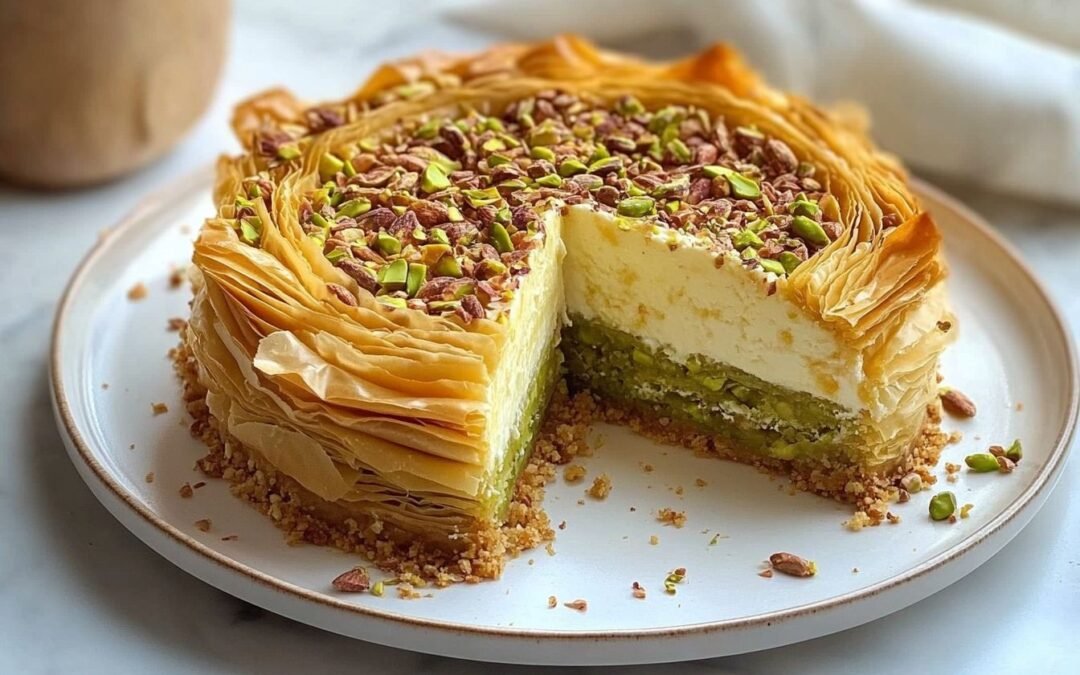
If you’re looking for a sweet and savory dessert, you might want to try making the kunafa with pistachio recipe. This Middle Eastern pastry is made with shredded phyllo dough and filled with cheese, then soaked in a sweet syrup and topped with pistachios. It’s a perfect dessert for any occasion, and it’s surprisingly easy to make.
To make kunafa with pistachio, you’ll need a few key ingredients. You’ll need shredded phyllo dough, also called kataifi, as well as mozzarella cheese and fresh ricotta. You’ll also need ghee or clarified butter, sugar, lemon juice, and rose water or orange-flower water. And of course, you’ll need pistachios, which give the dessert its distinctive flavor and texture. With these ingredients in hand, you’ll be ready to start making your kunafa with pistachio.
Origin of Kunafa
Kunafa, also known as kanafeh, is a Middle Eastern dessert popular in many countries, including Lebanon, Israel, Turkey, and Egypt. It is a sweet pastry with shredded phyllo dough, cheese, and sugar syrup. In this section, we will explore the cultural significance and historical background of Kunafa.
Cultural Significance
Kunafa is an important dessert in Middle Eastern culture and is often served during special occasions, such as weddings, Ramadan, and Eid al-Fitr. It is a symbol of hospitality and generosity, and it is common for families to share kunafa with their guests.
Historical Background
The origins of kunafa are not clear, but it is believed to have originated in the city of Nablus in Israel today. According to legend, a woman named Asmahan created the dish during the Ottoman Empire period. She was a master chef who worked in the palace of the governor of Nablus. One day, she accidentally dropped a tray of shredded phyllo dough into a pot of sweet cheese, creating the first Kunafa.
Over time, kunafa spread throughout the Middle East and became a popular dessert in many countries. Today, there are many variations of kunafa, including ones with different types of cheese or toppings such as pistachios, almonds, or cream.
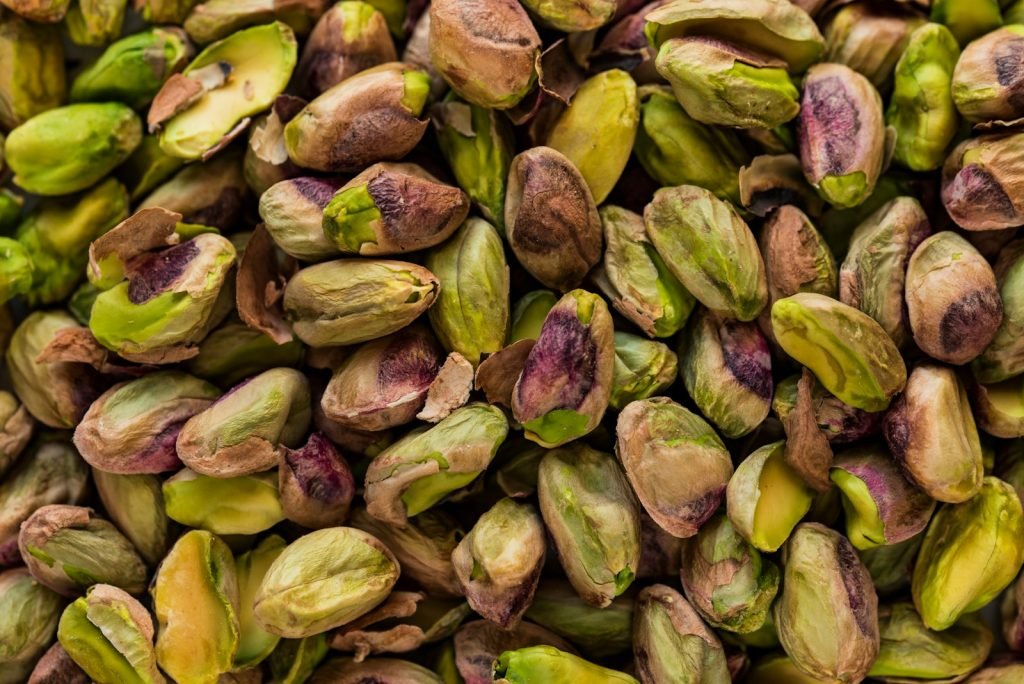
Ingredients:
- 12 oz. of grated mozzarella
- 6 oz. of fresh ricotta
- 1 cup of ghee or melted clarified butter
- ¼ teaspoon of kosher salt
- Orange food coloring (optional)
- 1 lb. of fresh or frozen shredded phyllo pastry (kataifi)
- 1 cup (200 g) of sugar
- 1 teaspoon of fresh lemon juice
- 1 teaspoon of rose water (optional)
- ¼ cup of finely crushed raw pistachios
- ¼ cup of dried rose petals (optional)
How to Make the Kunafa with Pistachio Recipe?
Professional Kunafa Bites Recipe
Begin by preheating your oven to 375°F (190°C). In a separate bowl, combine the ricotta and mozzarella cheese to create a homogenous filling.
In a small bowl, prepare a vibrant ghee infusion by whisking together the ghee, salt, and desired food coloring. Ensure thorough mixing for even color distribution.
Using a sharp knife, meticulously cut the kataifi dough (shredded phyllo) into uniform 1-inch pieces. Separate the strands gently by hand to achieve a light and airy texture. Subsequently, pour the prepared ghee infusion over the kataifi and meticulously toss to achieve a complete and even coating.
Divide the coated kataifi mixture evenly amongst the prepared muffin cups. Utilize your fingertips to gently press a portion of the mixture up the sides, forming a well in the center of each cup. Subsequently, add a generous tablespoon of the cheese mixture to the center of each well, ensuring the cheese remains distanced from the pan’s edges. Finally, distribute the remaining kataifi mixture over the cheese filling in each cup, pressing down firmly with your palm or a spoon to achieve a compact and even surface, nearly level with the rim of the pan.
Bake the assembled Kunafa bites for 15-20 minutes, or until a desirable level of crispness is achieved.
While the Kunafa bakes, prepare a simple syrup by combining sugar, lemon juice, rose water (optional), and water in a saucepan over medium heat. Bring the mixture to a boil, then reduce heat and simmer for approximately 3 minutes, ensuring the sugar dissolves completely. Remove the pan from heat and allow the syrup to cool slightly.
Once the Kunafa bites are fully baked, carefully invert them onto a prepared baking sheet. Drizzle each Kunafa bite with a generous portion of the reserved syrup, creating a glistening and flavorful finish. For an optional yet visually appealing garnish, consider sprinkling each bite with chopped pistachios and dried rose petals.
Serving Suggestions
- Top it off with whipped cream or vanilla ice cream. The creamy texture of the whipped cream or ice cream complements the crunchy texture of the kunafa, making for a perfect combination.
- Add a drizzle of rose syrup or honey on top. This adds a touch of sweetness and floral flavor to the dish.
- Serve it with a side of fresh fruit, such as strawberries or raspberries. The tartness of the fruit balances out the sweetness of the kunafa.
- For an extra crunch, sprinkle some chopped pistachios on top. This adds a layer of nuttiness to the dish.
- Enjoy it with a cup of Arabic coffee or tea. The bitterness of the coffee or tea helps to cut through the sweetness of the kunafa.
Storage and Preservation
After preparing this delicious recipe, you may have leftovers that you want to store for later. Here are some tips on how to properly store and preserve your kunafa:
- Store the kunafa in an airtight container to prevent it from drying out and absorbing any odors from the fridge.
- You can store the kunafa in the fridge for up to 3 days. However, we recommend consuming it as soon as possible to enjoy its fresh taste and texture.
- If you want to store the kunafa for a longer period, you can freeze it. Wrap the kunafa tightly in plastic wrap and then in aluminum foil to prevent freezer burn. It can be frozen for up to 3 months.
- When you want to eat the frozen kunafa, leave it in the fridge overnight to thaw. Then, bake it at 350°F for 10-15 minutes until it’s hot and crispy.
Common Mistakes to Avoid
Using the Wrong Type of Cheese
One of the most important ingredients in kunafa is the cheese. Using the wrong type of cheese can result in a dish that is too salty or not flavorful enough. The best cheese to use for kunafa is a soft, unsalted cheese that melts easily. Some good options include mozzarella, ricotta, or akkawi cheese.
Not Soaking the Dough
Another common mistake is not soaking the dough properly. To achieve the perfect texture, the dough needs to be soaked in ghee before baking. If the dough is not soaked enough, it will be dry and tough. If it is soaked for too long, it will become soggy and lose its texture. Aim to soak the dough for around 30 minutes before baking.
Overbaking the Kunafa
Overbaking the kunafa can result in a dry and tough texture. It’s important to keep an eye on the dish while it’s baking and take it out of the oven as soon as it turns golden brown. This usually takes around 30-40 minutes in a preheated oven at 350°F.
Not Using Enough Butter
Butter is an essential ingredient in kunafa, as it helps to give the dish its signature flavor and texture. Make sure to use enough butter when assembling the dish, as this will help to keep it moist and flavorful. Don’t be afraid to use a generous amount of butter on each layer of dough.
Conclusion
We hope you enjoyed learning how to make this kunafa with pistachio recipe! This Middle Eastern dessert is a delicious treat that is perfect for any occasion.
With its crispy layers of phyllo dough, sweet cheese filling, and crunchy pistachio topping, kunafa is a dessert that is sure to impress your guests. Plus, it’s surprisingly easy to make at home!
By following our recipe and tips, you can create a beautiful and tasty kunafa that will rival any bakery’s. Don’t be afraid to experiment with different types of cheese or toppings to make this dessert your own.
Remember to serve your kunafa warm and drizzle it with syrup for the perfect finishing touch. We guarantee your taste buds will thank you for this delectable dessert!
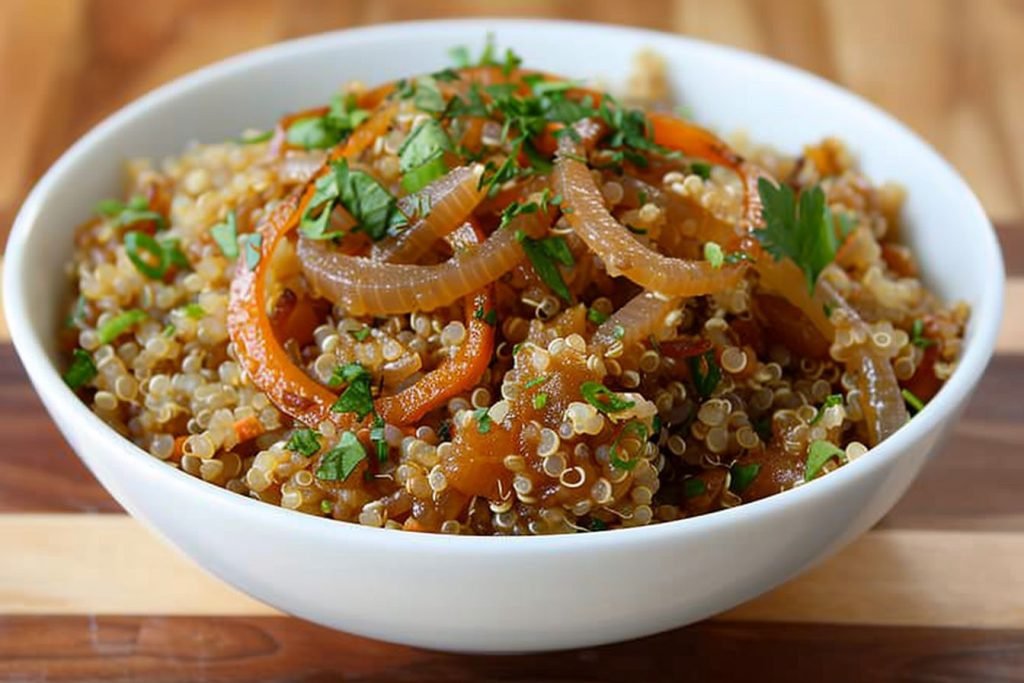
Just so you know, this kunafa can be a great dessert after having mujadara with quinoa.
Get its recipe now (by clicking the image below):