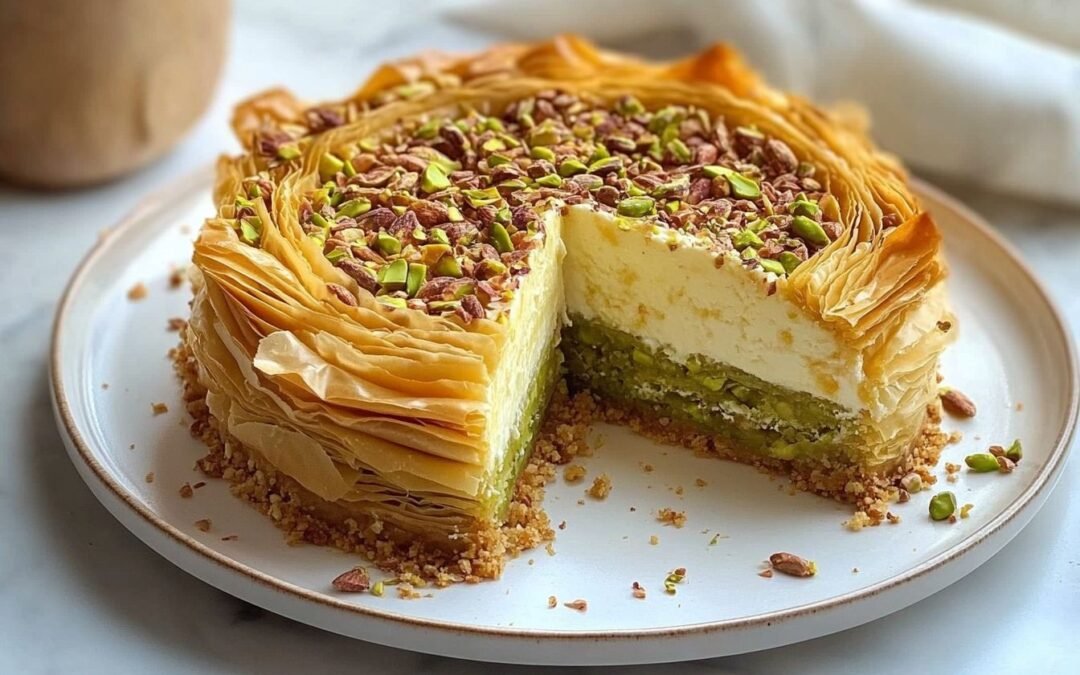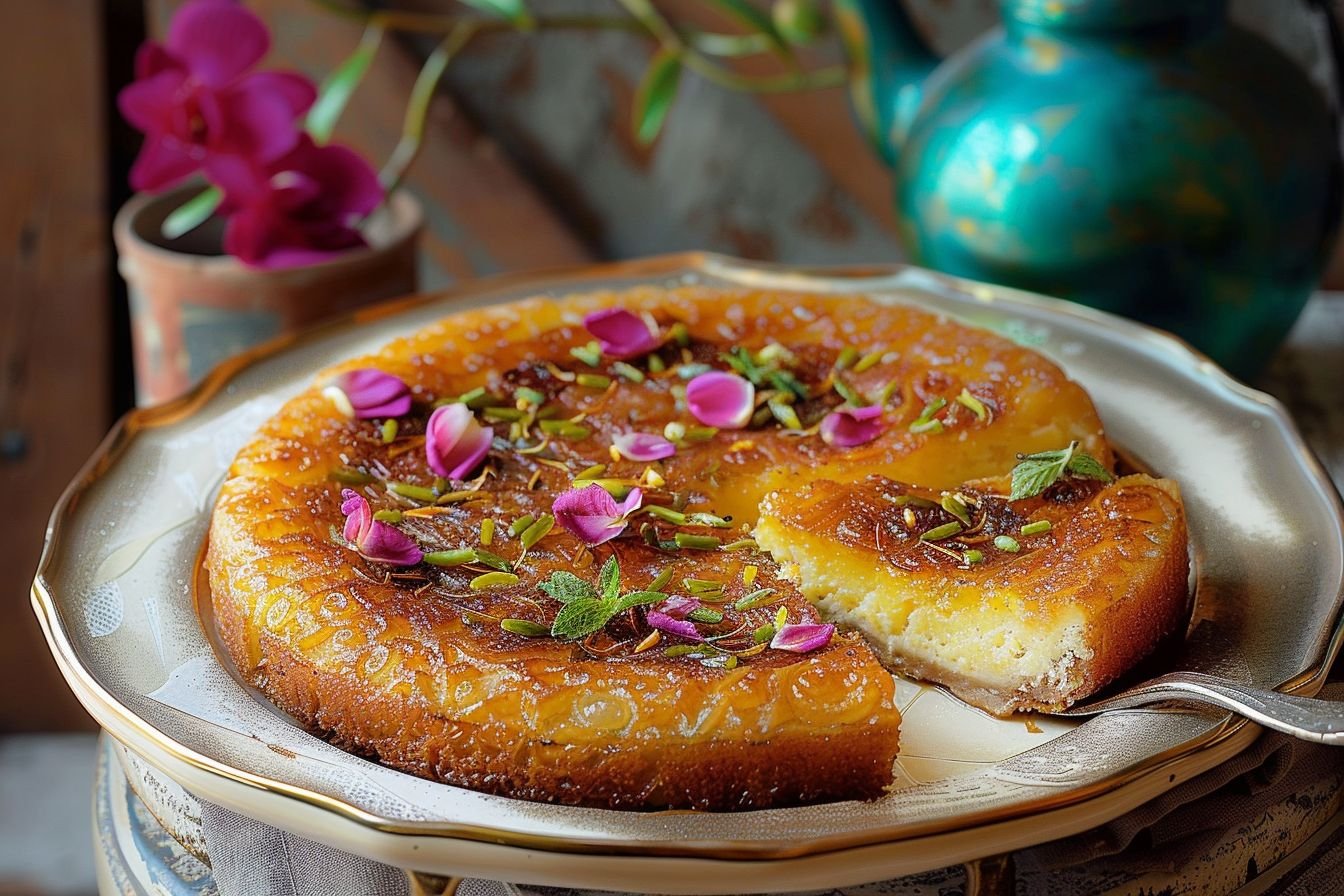
Kunafa with ricotta is a traditional Middle Eastern dessert both sweet and savory. It’s made with crunchy shredded phyllo dough layered with a creamy ricotta cheese filling and drizzled with a sweet-scented sugar syrup. The combination of textures and flavors is truly irresistible.
The scented sugar syrup, requires granulated sugar, water, fresh lemon juice, cinnamon stick, and cardamom pods. The cheese filling, requires good quality, creamy ricotta cheese, Arabic-style clotted cream, granulated sugar, and vanilla extract. Lastly, the kunafa crust requires either kunafa or kataifi pastry, ghee, or butter.
What Is Kunafa?
Kunafa is a popular Middle Eastern dessert made with shredded phyllo pastry and a sweet cheese filling. The pastry is typically soaked in a sugar syrup, giving it a sweet and sticky texture, while the cheese filling adds a creamy and slightly savory flavor.
Origin of Kunafa
Kunafa is believed to have originated in the Levant region, which includes modern-day Syria, Lebanon, and Israel. It is said to have been created by the Arab Bedouins, who would make the dessert using ingredients readily available in the desert.
Over time, kunafa has become a staple dessert in many Middle Eastern countries and is often served during special occasions such as weddings and religious holidays.
Kunafa Varieties
- Kunafa with nuts: This version of kunafa includes a mixture of chopped nuts such as pistachios, almonds, and walnuts, which are sprinkled on top of the pastry along with the cheese filling.
- Kunafa with cream: In this variation, the cheese filling is replaced with a sweet cream filling, which gives the dessert a lighter and creamier texture.
- Kunafa with fruit: Some versions of kunafa include a layer of fresh fruit such as sliced strawberries or mangoes, which are added on top of the cheese filling.

Ingredients:
Scented Sugar Syrup:
- 2 cups (400g) of granulated sugar
- 1 cup of water
- 1 tsp of fresh lemon juice
- 2 smashed open cardamom pods (optional)
- 1/2 cinnamon stick (optional)
Cheese Filling:
- 500 gr of good quality ricotta cheese
- 1/4 cup (60g) Arabic-style clotted cream (ashta)
- 1 tbsp of granulated sugar (optional)
- 1/2 tsp of vanilla extract
Kunafa Crust:
- 1lb/ 500g kunafa pastry, fresh or frozen (using fresh – freeze for an hour for easier cutting. Using frozen – thaw slightly)
- 1 cup (8oz/ 227g) of ghee or melted butter
Garnish:
- Pistachios and dried rose petals (optional)
How to Make Kunafa with Ricotta?
Scented Syrup:
- In a saucepan over high heat, combine sugar, water, and lemon juice. Avoid excessive stirring, as this can promote crystallization. If the sugar dissolves unevenly, a gentle swirl is permissible.
- Once a rolling boil is achieved, reduce heat to medium-low and introduce the cinnamon stick and cardamom pods (if using) for 10 minutes of gentle simmering. The syrup should thicken slightly, resembling hot maple syrup, and will continue to thicken further as it cools.
- Remove the pan from heat and transfer the syrup to a suitable container. Allow it to cool completely before use. Discard the cinnamon and cardamom pods for a subtle fragrance, or retain them for a more pronounced one.
Cheese Filling:
- In a separate bowl, whisk together ricotta cheese, sugar (if desired), cream, and vanilla extract until well combined.
- Set aside.
Baking Dish Preparation:
- Preheat your oven to 200°C (390°F) and adjust the rack to the lower-middle position.
- Generously grease a 12-inch/30-centimeter round cake pan with ghee or clarified butter.
Assembling the Kunafa:
- For easier shredding, partially freeze the kunafa dough. Shred the dough into 1-inch/2.5-centimeter pieces.
- If using fresh kunafa, allow it to thaw slightly before proceeding.
- Using your hands, thoroughly coat the shredded kunafa with the melted ghee/butter, ensuring each strand is well-enrobed.
Layering the kunafa:
- Spread two-thirds of the prepared kunafa into the greased pan, pressing firmly to form both the base and sides.
- This creates a vessel to contain the cheese filling and prevent burning during baking.
- Utilize the flat bottom of a cup to ensure the kunafa layer is densely packed.
Cheese Filling Integration:
- Evenly distribute the cheese filling over the compressed kunafa base.
Completing the kunafa:
- Scatter the remaining one-third of the kunafa over the cheese filling and gently press to create a uniform surface.
Baking to Golden Perfection:
- Transfer the pan to the preheated oven and bake for 40-45 minutes, or until the top and sides of the kunafa achieve a deep golden-brown hue.
- Insert a knife near the side of the kunafa to assess the color; the longer the baking time, the crispier the result.
Syrup Application:
- Upon removing the Kunafa from the oven, immediately drench it with the cooled, scented syrup.
- Begin pouring from the edges, working your way inwards in a circular motion, ensuring the entire surface is generously coated.
Resting and Serving:
- Allow the kunafa to rest for 5-10 minutes, permitting the syrup to permeate the layers.
- Carefully invert the kunafa onto a serving platter.
- Garnish the kunafa with chopped pistachios and dried rose petals.
- Cut the Kunafa into wedges and serve warm.
- Kunafa is best enjoyed fresh from the oven, but leftovers can be refrigerated and reheated for future indulgence.
Pairing and Accompaniments
Beverage Pairings
Hot tea or Arabic coffee is the perfect beverage pairing for kunafa. The bitterness of the coffee or tea helps balance out the sweetness of the dessert, while the beverage’s warmth enhances the dishes’ flavors. A glass of milk or a fruit smoothie would also be a great choice if you prefer a cold drink.
Side Dishes
This dessert is rich and decadent, so it’s best to pair it with something light and refreshing. A fresh fruit salad or a simple green salad would be the perfect accompaniment, providing a nice contrast to the sweetness of the dessert. Alternatively, you could serve it with a scoop of vanilla ice cream or a dollop of whipped cream for an extra indulgent treat.
Storing and Reheating
Refrigeration Guidelines
After preparing it, it is important to store it properly to maintain its quality and freshness. I recommend refrigerating any leftover kunafa in an airtight container for up to three days. Let it cool down to room temperature before storing it in the refrigerator.
If you plan on storing kunafa for longer, it is best to freeze it. Wrap it tightly in plastic wrap and place it in an airtight container before freezing. Kunafa can be frozen for up to three months without compromising its texture and flavor.
Reheating Instructions
When reheating your kunafa, it is important to do it properly to prevent it from becoming dry and tough. I recommend reheating it in the oven for the best results. Here are the steps to follow:
- Preheat the oven to 350°F (175°C).
- Remove the kunafa from the refrigerator or freezer and let it come to room temperature.
- Place the kunafa in a baking dish and cover it with aluminum foil.
- Put it in the preheated oven and bake it for 10-15 minutes or until it is heated through.
- Remove the aluminum foil and bake it for an additional 5-10 minutes or until the top is golden brown and crispy.
Alternatively, you can reheat kunafa in the microwave, but it may become soggy and lose its texture. If you choose to use the microwave, be sure to cover it with a damp paper towel to prevent it from drying out. Heat it for 30-second intervals until it is heated through.
Customizing Your Kunafa
Alternative Fillings
While ricotta is a great filling for kunafa, you can experiment with different types of cheese or even sweet fillings like Nutella or fruit preserves. Here are some other filling options to consider:
- Cream cheese: Cream cheese adds a tangy flavor to the sweet kunafa and its smooth texture pairs well with the crunchy pastry.
- Mozzarella: Mozzarella is a great alternative to ricotta if you want a milder flavor. It also melts beautifully, making for a gooey, cheesy filling.
- Walnuts: Chopped walnuts add a nutty crunch to the kunafa, and their earthy flavor complements the sweetness of the syrup.
- Coconut: Shredded coconut is a popular filling for kunafa in some parts of the world. Its chewy texture and tropical flavor make for a unique twist on the classic dessert.
Dietary Adaptations
If you have dietary restrictions, you can still enjoy kunafa with a few tweaks. Here are some adaptations to consider:
- Gluten-free: Use gluten-free kunafa dough or substitute with crushed nuts or shredded coconut for a gluten-free crust.
- Dairy-free: Substitute the ricotta with a dairy-free alternative like tofu or cashew cheese.
- Vegan: Use a dairy-free filling and substitute honey (if added) with agave or maple syrup.
With these customization options, you can create a kunafa that is uniquely yours. Whether you prefer a classic ricotta filling or want to experiment with new flavors, there’s no wrong way to enjoy this beloved dessert.
Troubleshooting Common Issues
Dough Consistency Problems
When making this kunafa, getting the dough consistency right is crucial. If the dough is too dry, it will be difficult to shape and may break apart during baking. On the other hand, if the dough is too wet, it will be sticky and hard to handle.
To achieve the perfect dough consistency, start by mixing the shredded phyllo dough with melted butter until it is evenly coated. Then, add a small amount of water at a time and mix until the dough comes together and forms a ball. If the dough is still too dry, add a little more water, but be careful not to add too much.
If your dough is too wet, you can try adding a little more shredded phyllo dough to absorb the excess moisture. Alternatively, you can sprinkle some cornstarch or flour on the dough and knead it until it reaches the desired consistency.
Cheese Filling Challenges
Another common issue when making this dessert is getting the cheese filling just right. If the filling is too dry, it will be crumbly and won’t hold together well. If it is too wet, it will be runny and may leak out of the pastry during baking.
To avoid these problems, start by mixing the ricotta cheese with sugar and cornstarch until it is well combined. This will help thicken the filling and prevent it from becoming too runny. You can also add a little bit of heavy cream to the mixture to make it creamier and easier to spread.
If your filling is too dry, you can try adding a little more heavy cream or ricotta cheese to the mixture. Alternatively, you can mix in some egg yolks to help bind the filling together.
Conclusion
As I take the last bite of my kunafa with ricotta, I can’t help but feel satisfied with my choice. The combination of the crispy shredded phyllo dough, creamy ricotta cheese, and sweet syrup is simply irresistible.
Throughout my research and experimentation, I have discovered that this is a beloved dessert in many Middle Eastern countries. Its popularity is well-deserved, as it is a dessert that truly satisfies all the senses.
One thing that I appreciate about it is its versatility. It can be served warm or cold and can be customized with a variety of toppings such as nuts, fruits, or even chocolate.
Overall, I highly recommend trying kunafa with ricotta if you haven’t already. It is a dessert that is sure to impress and delight anyone who tries it.
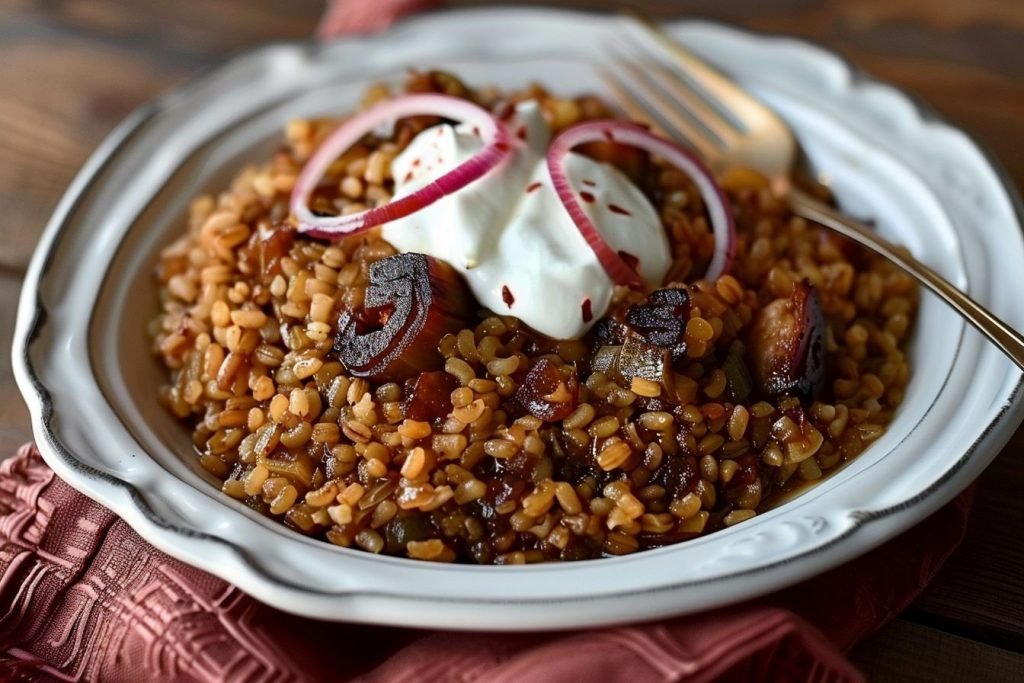
Before you go, did you know this can be a perfect dessert after having mujadara with cracked wheat?
Get its recipe now (by clicking the image below):