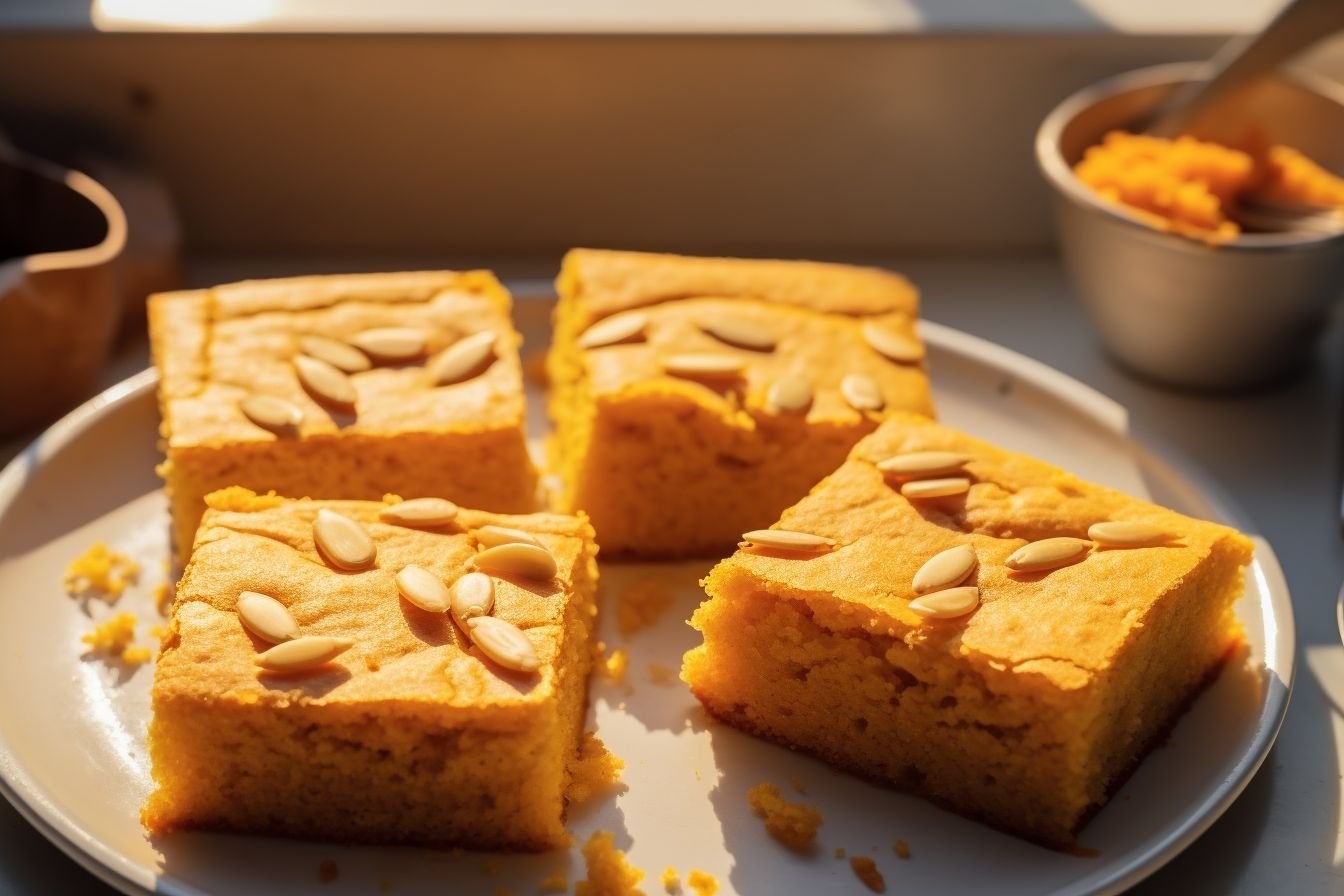
I recently discovered the delightful Middle Eastern dessert known as sfouf. The sfouf recipe has simple ingredients and a beautiful yellow color thanks to the turmeric.
To make sfouf, you’ll need coarse or fine semolina (or a mixture of both), all-purpose flour, baking powder, canola oil, milk, cane sugar, tahini (or oil) to grease the pan, and a handful of pine nuts or almonds for garnish. The recipe is easy to follow, making it a great option for novice bakers.
I was pleasantly surprised by how delicious sfouf is, and I love that it’s a healthier dessert option. The use of turmeric not only adds a unique flavor but also provides health benefits. Overall, I highly recommend giving this recipe a try if you’re looking for a new dessert to add to your repertoire.
Sfouf Origin and Cultural Significance
Sfouf is a traditional Middle Eastern cake that is popular in Lebanon, Syria, and Jordan. The cake’s name ‘Sfouf’ means ‘yellow’ in Arabic, which is reflective of its color, derived from the turmeric powder used in the recipe.
Sfouf is more than just a dessert; it holds cultural significance in the Middle East. It is a symbol of hospitality and generosity, often served to guests as a sign of respect and welcome. Sfouf is also a popular treat during Ramadan, the Islamic holy month of fasting. It is traditionally served at iftar, the meal that breaks the fast at sunset.
Turmeric, which gives the cake its vibrant yellow color, is known for its anti-inflammatory properties and is a common ingredient in traditional medicine. Tahini and pine nuts, which are also used in the recipe, are nutrient-dense and have been used in Middle Eastern cooking for centuries.
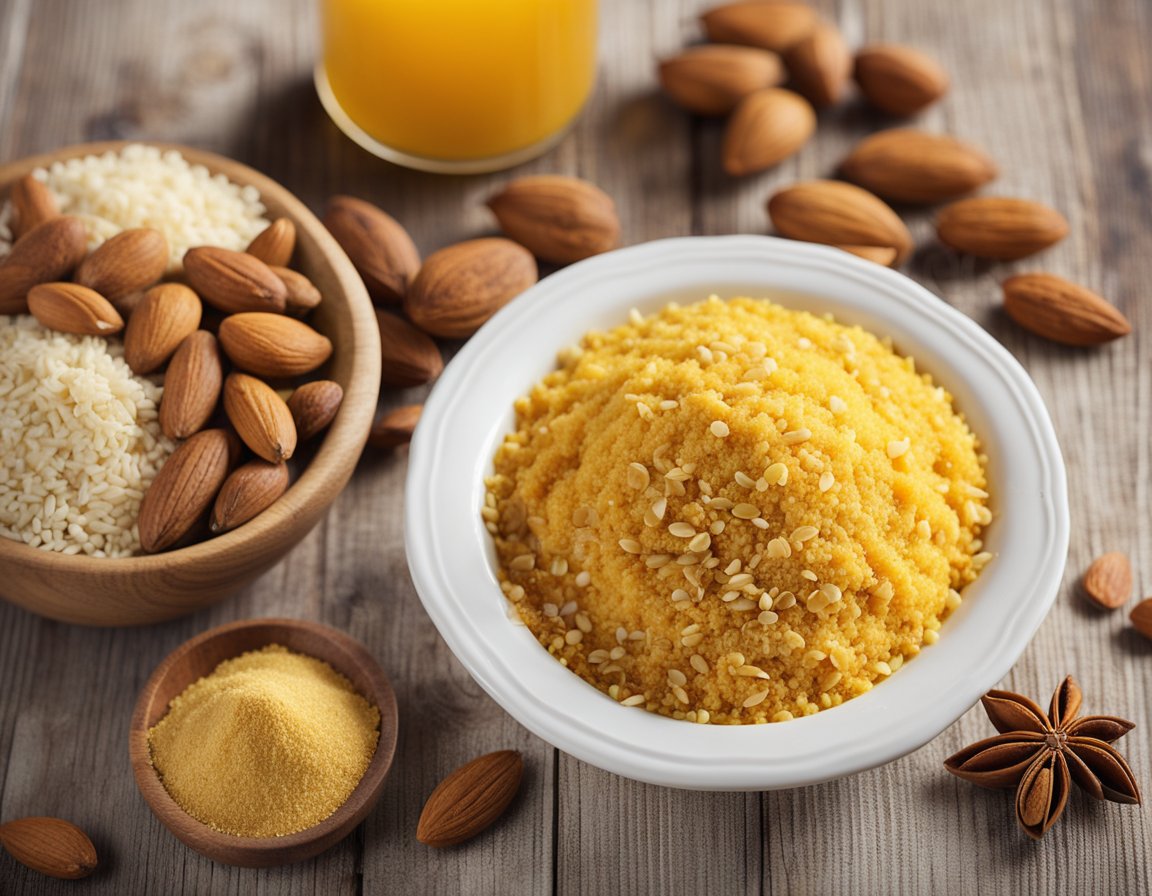
Ingredients:
- 1 ½ cups of coarse semolina or fine or a mixture of both
- ½ cup of all-purpose flour
- 1 tablespoon of turmeric
- 1 ½ teaspoons of baking powder
- ½ cup of canola oil or any other neutral oil
- 1 cup of milk
- 1 cup of cane sugar
- 1-2 tablespoons of tahini to grease the pan (can be replaced with oil)
- A handful of pine nuts or almonds
How to make sfouf?
- Start by heating the oven to 375ºF. Grease a 9×9″ baking pan using tahini sesame oil or any other oil I prefer.
- Now, in a big bowl, mix the dry stuff: semolina, turmeric, flour, and baking powder. Make sure it’s all mixed up well.
- In a different small bowl, stir together the wet stuff: canola oil, milk, and cane sugar until the sugar dissolves in the mix.
- After that, mix the dry and wet stuff until the batter is smooth and bright yellow. Pour it into the prepared pan and sprinkle the pine nuts all over the top.
- Put the sfouf in the oven you preheated and bake for 30-35 minutes until the pine nuts turn golden.
- When it’s finished, let the sfouf cool on a wire rack, then slice it into 16 squares or diamonds.
Serving and Storage
Cutting and Presentation
Once the sfouf is baked and cooled, it’s time to cut it into pieces for serving. Traditionally, sfouf is cut into diamond-shaped pieces. To achieve this, first, cut the cake into long strips, then cut diagonally across the strips. This will create diamond-shaped pieces that are perfect for serving.
To add a touch of elegance to your presentation, dust the top of the sfouf with powdered sugar or sprinkle some sliced almonds on top. You can also serve it with a side of fresh fruit or a dollop of whipped cream.
Storage Tips
If you have any leftover sfouf, you can store it in an airtight container at room temperature for up to three days. However, it’s best to consume it within the first two days to ensure maximum freshness and flavor.
If you want to keep the sfouf for longer, you can also freeze it. Wrap the cake tightly in plastic wrap or aluminum foil and store it in the freezer for up to three months. When you’re ready to eat it, simply thaw it at room temperature for a few hours before serving.
It’s important to note that the texture of the sfouf may change slightly after freezing, but it will still be delicious.
Pairing Suggestions
When it comes to serving sfouf, there are plenty of options for drinks and sweet dishes that can complement this turmeric cake. Here are some of my favorite pairing suggestions:
Drinks
- Arabic coffee: A strong, flavorful cup of Arabic coffee is the perfect accompaniment to a slice of sfouf. The bitterness of the coffee helps balance out the sweetness of the cake.
- Mint tea: A refreshing cup of mint tea is another great option. The mint flavor pairs well with the anise and turmeric in the cake.
- Rose water lemonade: If you’re looking for something a little more unique, try serving sfouf with a glass of rose water lemonade. The floral notes of the rose water complement the cake’s nutty flavor, while the lemonade’s tartness helps cut through the sweetness.
Sweet Dishes
- Mahalabiya: This Middle Eastern milk pudding is a great option if you’re looking for something creamy and sweet to serve alongside sfouf. The cool, smooth texture of the pudding pairs well with the dense, crumbly texture of the cake.
- Baklava: If you’re in the mood for something a little more decadent, serve sfouf with a piece of baklava. The layers of flaky phyllo dough and sweet honey syrup are the perfect complement to the nutty flavor of the cake.
- Fruit salad: A simple fruit salad is a great way to balance out the sweetness of the cake. Try serving sfouf with a bowl of fresh, seasonal fruit for a refreshing and healthy pairing option.
Variations of Sfouf
In this section, I will introduce you to two popular variations of sfouf: nut-free alternatives and vegan adaptations.
Nut-Free Alternatives
The classic sfouf recipe includes a generous amount of ground almonds or pine nuts. However, for those who have nut allergies or simply don’t like nuts, there are nut-free alternatives to sfouf. Instead of using nuts, you can add more semolina flour or use other ingredients that provide texture and flavor. Here are some nut-free alternatives to consider:
- Coconut: Adding shredded coconut to the batter can give sfouf a tropical twist. It also adds a chewy texture that complements the cake’s crumbly texture.
- Sesame Seeds: Toasted sesame seeds can add a nutty flavor to sfouf without the risk of allergens. You can sprinkle them on top of the cake before baking for a crunchy crust.
- Orange Blossom Water: This fragrant ingredient is often used in Middle Eastern desserts. Adding a few drops of orange blossom water to the batter can give the sfouf a citrusy aroma and taste.
Vegan Adaptations
Sfouf is already an egg-free dessert, which makes it a great option for vegans. However, the classic recipe includes butter or ghee, which are dairy products. Here are some vegan adaptations to sfouf that you can try:
- Olive Oil: Instead of butter or ghee, you can use olive oil to make sfouf. Olive oil is a healthy fat that adds a fruity flavor to the cake. You can also use other vegetable oils such as canola or coconut oil.
- Agave Syrup: Instead of honey, you can use agave syrup to sweeten sfouf. Agave syrup is a natural sweetener that has a lower glycemic index than sugar. You can adjust the amount of syrup to your liking.
- Aquafaba: Aquafaba is a liquid that comes from a can of chickpeas. It can be used as an egg substitute in baking. You can whip aquafaba until it forms stiff peaks and fold it into the sfouf batter to make it fluffier.
Conclusion
I hope you enjoyed learning about sfouf, a delicious Middle Eastern cake that is perfect for any occasion. With its unique combination of semolina, turmeric, and pine nuts, sfouf is a treat for the senses.
In this article, I have shared with you my recipe for sfouf, as well as some tips and tricks for making it just right. Remember to use fine semolina flour for the best texture, and to let the cake cool completely before slicing it.
If you’re feeling adventurous, you can experiment with different flavorings and toppings for your sfouf. Some popular variations include adding rose water or coconut to the batter or topping the cake with chopped pistachios or almonds.
Overall, sfouf is a versatile and easy-to-make dessert that is sure to impress your friends and family. Whether you’re celebrating a special occasion or just want to indulge in something sweet, sfouf is a perfect choice. So why not give it a try? I promise you won’t be disappointed!
Did you know? It’s highly recommended to have sfouf with sahlab drink.
Get the recipe now (by clicking the image below):