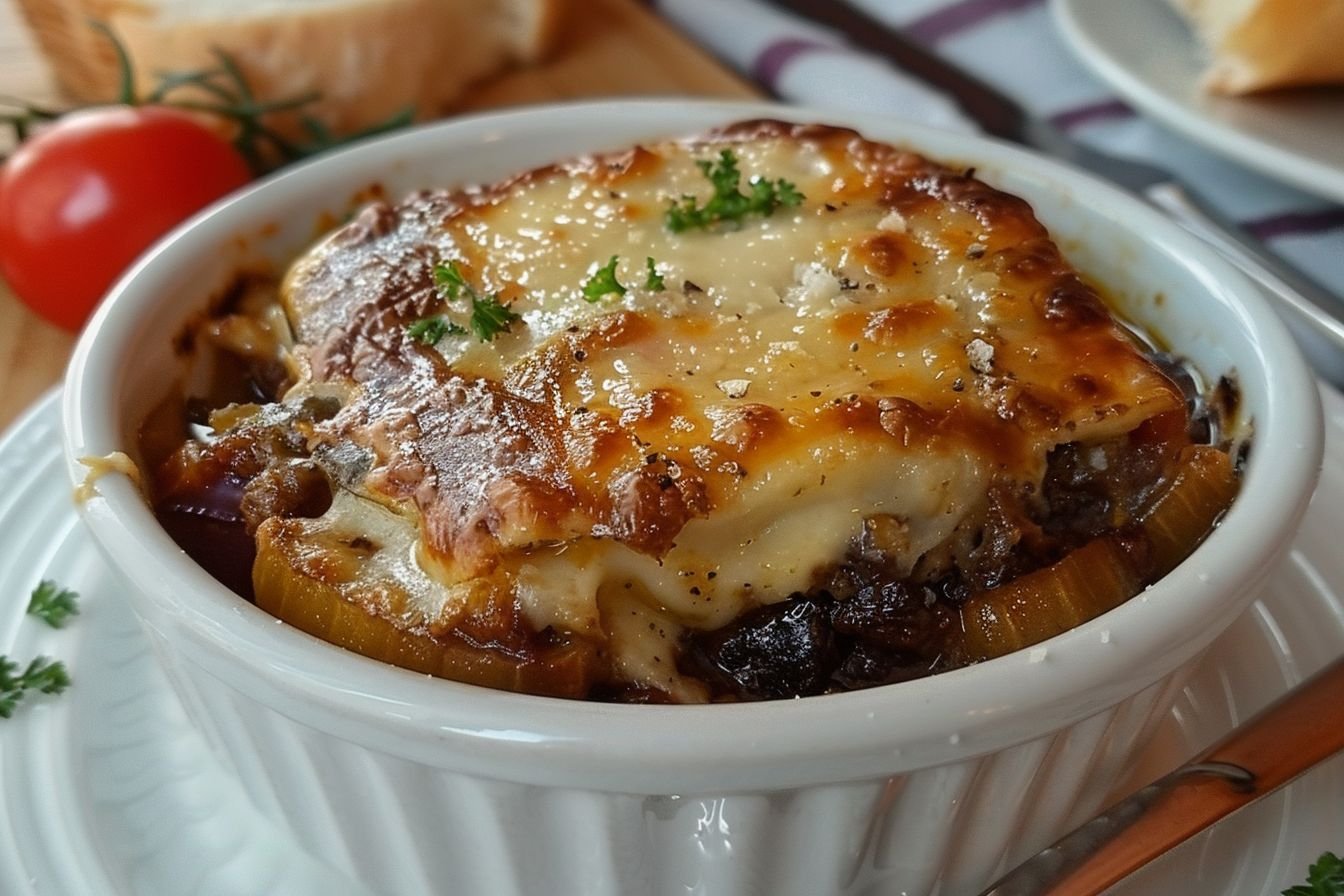
Moussaka without eggs is perfect for anyone who is allergic to eggs or simply wants to try a new twist on a classic dish.
To make this moussaka, you will need large eggplants, potatoes, olive oil, onions, tomato puree, cinnamon, salt and pepper, bay leaves, garlic cloves, oregano, thyme, nutmeg, plum tomatoes, meat, a mix of mozzarella and cheddar cheese, tepid milk, and butter.
By omitting the eggs, this moussaka recipe is not only suitable for those with allergies, but it’s also a healthier option for anyone looking to cut down on their egg intake. With its rich combination of spices, vegetables, and meat, this moussaka is sure to become a new favorite in your household. So let’s get cooking!
Understanding Moussaka
Origins and History
Moussaka is believed to have originated in the Middle East, and it has been a staple dish in the Mediterranean region for centuries. The exact origin of moussaka is unclear, but it is thought to have been introduced to Greece during the Ottoman Empire. Today, moussaka is a popular dish in Greece, Turkey, and many other Mediterranean countries.
Traditional Ingredients
Classic moussaka typically features layers of eggplant, seasoned ground meat (often lamb or beef), onions, garlic, and tomatoes, and is topped with a creamy béchamel sauce crafted from eggs and milk. However, for those who cannot eat eggs, it is possible to make a delicious moussaka using alternative ingredients.
Instead of using eggs in the béchamel sauce, you can use a combination of flour, butter, and milk to create a creamy sauce. Some recipes also call for the addition of cheese to the sauce to add extra flavor. Additionally, you can substitute the ground meat with lentils or mushrooms for a vegetarian version of the dish.
Egg Alternatives
Plant-Based Binders
Plant-based binders are a great alternative to eggs for those who are vegan or have an egg allergy. Some common plant-based binders that can be used in moussaka include:
- Flaxseed meal: Mix 1 tablespoon of flaxseed meal with 3 tablespoons of water to replace one egg in a recipe.
- Chia seeds: Mix 1 tablespoon of chia seeds with 3 tablespoons of water to replace one egg in a recipe.
- Silken tofu: Blend 1/4 cup of silken tofu to replace one egg in a recipe.
These plant-based binders not only work well as egg substitutes but also add nutritional value to your moussaka.
Dairy-Based Options
For those who are not vegan and can tolerate dairy, several dairy-based options can be used in place of eggs. Some common dairy-based binders that can be used in moussaka include:
- Greek yogurt: Swap one egg in your recipe for 1/4 cup of Greek yogurt.
- Sour cream: Substitute one egg in your recipe with 1/4 cup of sour cream.
- Cream cheese: Use 1/4 cup of cream cheese to replace one egg in a recipe.
These dairy-based options not only add richness and creaminess to your moussaka but also provide a good source of protein.

Ingredients:
- 4 large eggplants
- 2 large potatoes, peeled and sliced
- Olive oil
- 2 chopped large onions
- 1 tablespoon of tomato puree
- 2 teaspoons of cinnamon
- Salt and pepper
- 3 bay leaves
- 4 crushed garlic cloves
- 1 teaspoon of oregano
- 1 teaspoon of thyme
- A pinch of nutmeg
- 2 cans of plum tomatoes
- 500g (1.1 lb) of minced meat
- Cheddar cheese and mozzarella cheese mix
- 2 1/2 cups of milk (at room temperature)
- 4 tablespoons of butter
How to Make Moussaka Without Eggs?
Preheat the oven to 180°C (350°F). Wash and slice the eggplants. Generously sprinkle them with salt and allow them to rest in a colander for 20-30 minutes to eliminate any bitterness and ensure minimal oil absorption during later cooking. Rinse the eggplant slices thoroughly with cold water and pat them dry with a clean cloth.
Deep-fry the eggplants and potatoes in olive oil until cooked through. Subsequently, transfer them to a plate lined with absorbent paper towels to remove excess oil.
In a separate pan, sauté the onions in olive oil over moderate heat until they soften and become translucent.
Add the minced meat to the softened onions and brown it thoroughly, ensuring all sides are cooked.
Once the meat is browned, incorporate the remaining ingredients for the meat sauce and simmer the mixture for 20-25 minutes. Reduce the heat and adjust the seasonings according to your preference.
In a suitable casserole dish, begin layering the cooked and drained eggplants and potatoes with the simmered meat sauce.
To create the bechamel sauce topping, melt butter in a pan over low heat. Gradually whisk in flour to form a paste-like consistency.
Gradually whisk in warmed milk, oregano, and a pinch of salt and pepper (if desired) into the butter-flour mixture. Stir the mixture continuously with a whisk until it thickens and achieves a smooth and creamy texture. Subsequently, add mozzarella cheese and stir it into the sauce until well combined.
Layer the prepared bechamel sauce over the moussaka in the casserole dish. Top the dish with any remaining mozzarella cheese.
Bake the assembled moussaka in the preheated oven until the cheese melts to a delightful golden brown color and the eggplants are fully cooked through.
Serving and Pairing
Side Dishes
Moussaka is a rich and hearty dish, so it’s best to pair it with light and refreshing side dishes. A simple Greek salad with crisp lettuce, juicy tomatoes, cucumbers, and tangy feta cheese is an excellent choice. The freshness of the salad will balance the richness of the moussaka and provide a nice contrast of textures.
Another great side dish to serve with moussaka is tzatziki, a Greek yogurt dip with garlic, cucumber, and dill. Its cool and creamy texture will complement the warm and savory flavors of the moussaka. You can also serve some warm pita bread to dip in the tzatziki or to scoop up the moussaka.
Wine Pairings
Moussaka is a dish that pairs well with red and white wines, depending on your preference. For red wine enthusiasts, Pinot Noir or Merlot pairs beautifully with moussaka, enhancing its rich flavors with every sip. The wine’s acidity and fruitiness will balance the moussaka’s richness.
If you prefer white wine, a crisp and acidic white such as a Sauvignon Blanc or a Pinot Grigio can also be a great choice. The acidity of the wine will cut through the richness of the dish and provide a refreshing contrast.
Nutritional Information
Allergen Information
This moussaka is a great option for those with egg allergies or who follow a vegan diet. The dish is made without any eggs, which is a common allergen. However, it is important to note that some recipes may use milk or cheese, which can be problematic for those with lactose intolerance or milk allergies. To avoid any allergen-related issues, it is recommended to check the ingredients of the recipe carefully before preparing the dish.
Conclusion
In conclusion, making moussaka without eggs is a great option for those who are allergic to eggs or follow a vegan diet. I have found that using a combination of tofu and nutritional yeast can provide a similar texture and flavor to traditional moussaka recipes that use eggs.
It’s important to note that while this recipe is egg-free, it still contains dairy products such as cheese and milk. For those who are lactose intolerant or follow a strict vegan diet, there are dairy-free alternatives available that can be used in place of these ingredients.
Overall, I highly recommend giving this egg-free moussaka recipe a try. It’s a delicious and satisfying dish that can be enjoyed by everyone, regardless of dietary restrictions. With a few simple substitutions, it’s easy to create a tasty and healthy meal that is sure to impress.
Did you know? Tahini salad is a perfect pairing to this dish.
Get its recipe now (by clicking the image below):