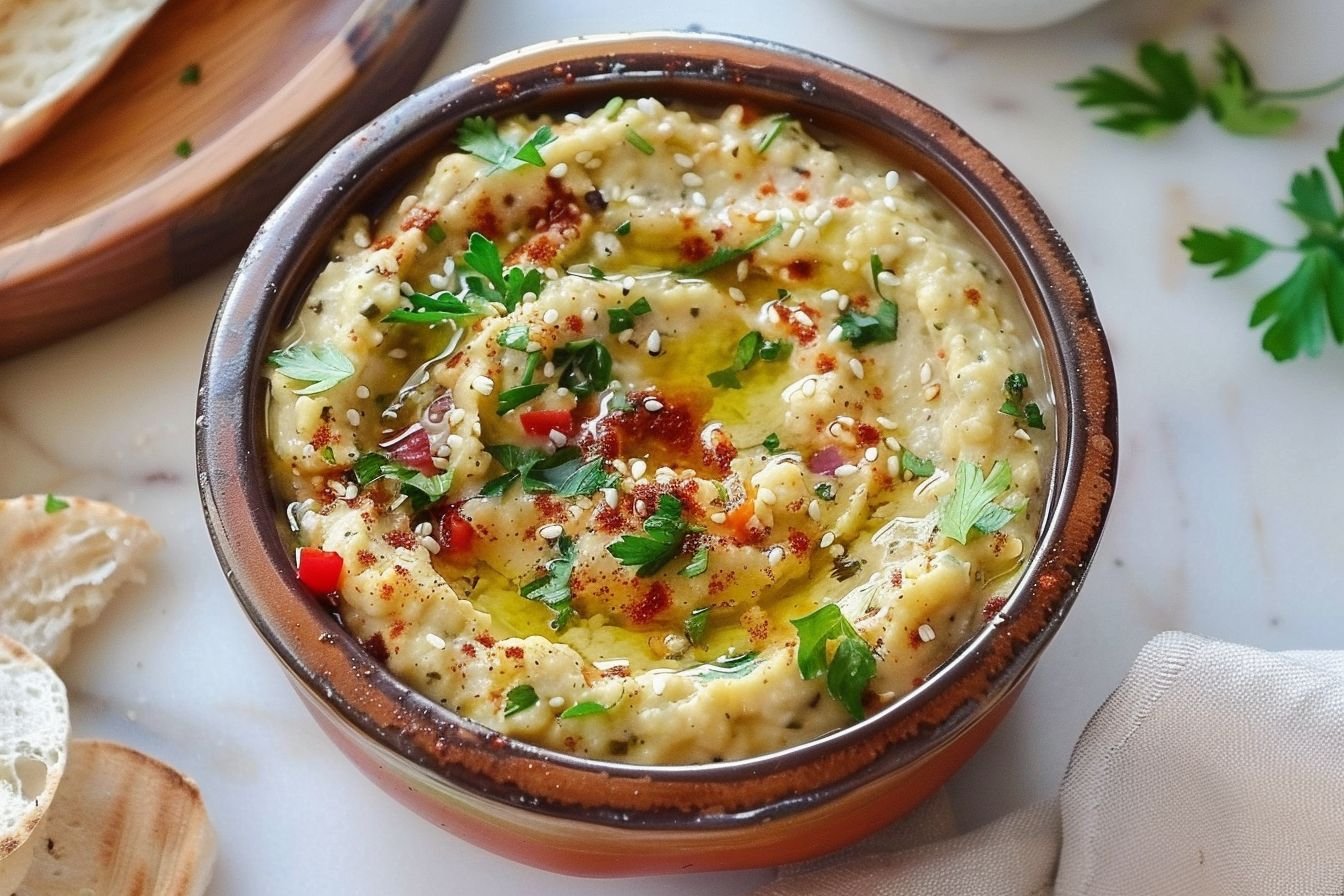
Baba ganoush with tomatoes is the perfect appetizer or snack for any occasion, and it’s surprisingly easy to make. The diced tomatoes add a burst of freshness and acidity to the creamy eggplant dip.
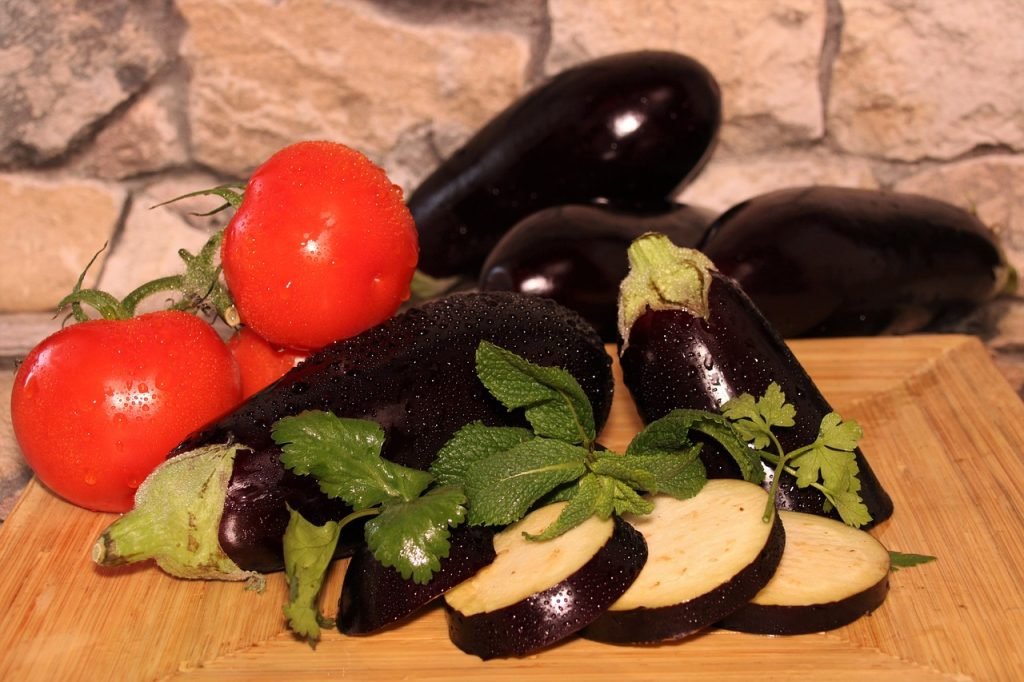
You’ll need just a handful of ingredients to whip up a batch of this baba ganoush. Of course, you’ll need an eggplant as the base, along with diced onion and garlic for flavor. Fresh parsley and lemon juice brighten up the dip, while olive oil and salt provide richness and seasoning. Pomegranate molasses and sumac are optional ingredients that add a touch of sweetness and tanginess, respectively. And don’t forget the diced tomatoes, which take this baba ganoush to the next level!
History of Baba Ganoush
Origins
The origins of baba ganoush can be traced back to the Levant region of the Middle East, which includes modern-day Syria, Lebanon, and Israel. “Baba” means father or grandfather in Arabic, and “ganoush” means pampered or spoiled. Legend has it that Baba Ganoush was named after a sheik who was so fond of the dish that he was often referred to as “Baba Ghanouj.”
Baba ganoush was originally made with a few simple ingredients, including roasted eggplant and tahini. Over time, however, the recipe evolved to include additional ingredients such as garlic, lemon juice, and parsley. Today, you can find baba ganoush throughout the Middle East and beyond and it is often served as an appetizer or snack.
Regional Variations
Many regional variations make this dish unique. In Lebanon, for example, baba ganoush is often made with pomegranate molasses, which gives the dish a sweet and tangy flavor. However, in Syria, baba ganoush is often made with yogurt, which gives the dish a creamy texture.
In Israel, baba ganoush is often made with tomatoes, which adds a sweet and slightly acidic flavor to the dish. This variation is perfect for those who love the traditional flavor of baba ganoush but want to add a little extra something to the dish.
Ingredients:
- 1 eggplant
- 1 diced tomato
- 1 diced onion
- 2 cloves of garlic
- 2 tablespoons parsley
- Juice from 1/2 lemon
- 1 tbsp of olive oil
- 1/2 tsp of salt
- 1 tbsp of pomegranate molasses (optional)
- Mint leaves (optional)
- Sumac (optional)
How to Make Baba Ganoush with Tomatoes?
Begin by charring the eggplant directly over a stovetop burner. Turn the eggplant frequently for 15 minutes, ensuring the skin blackens completely and the flesh softens considerably.
Once cool enough to handle, peel the eggplant and mash the flesh using a fork or potato masher.
Subsequently, incorporate onion, garlic, finely chopped tomato, and parsley. Drizzle with lemon juice, and olive oil, and season with salt to taste. For an optional touch of sweetness, you may also add pomegranate molasses.
To complete the dish, drizzle the baba ganoush with olive oil and garnish with sumac, parsley, or mint leaves. This flavorful dip can be enjoyed warm or chilled, with pita or tabun bread for scooping.
Serving Suggestions
Accompaniments
A variety of accompaniments can enhance the flavor and texture of the dish. One popular option is to serve it with pita bread or pita chips. The crunchiness of the bread complements the creamy texture of the baba ganoush, while the subtle flavor of the bread allows the flavors of the dip to shine through.
Another great accompaniment is fresh vegetables. Serving sliced cucumbers, carrots, and bell peppers alongside the dip adds a refreshing crunch and a burst of color to the dish. This option is also perfect for those who are looking for a healthier alternative to bread or chips.
Presentation Tips
There are a few tips that can help make the dish look even more appetizing. One option is to sprinkle chopped parsley or cilantro on top of the dip. This adds a pop of color and freshness to the dish, as well as a subtle hint of flavor.
Another presentation tip is to serve the dip in a hollowed-out tomato. This not only looks impressive, but it also adds an extra layer of tomato flavor to the dish. To do this, simply cut off the top of a large tomato, scoop out the insides, and fill it with the baba ganoush.
Nutritional Information
Here’s a breakdown of the nutritional information for a serving of baba ganoush with tomatoes:
- Calories: 47 kcal
- Total Carbohydrates: 10g
- Dietary Fiber: 4g
- Sugars: 6g
- Protein: 1g
- Sodium: 5mg
- Potassium: 375mg
- Vitamin A: 280IU
- Vitamin C: 9.2mg
- Calcium: 22mg
- Iron: 0.4mg
As you can see, this recipe is low in calories and high in fiber, making it a great option for those who are watching their weight. It’s also a good source of healthy fats, which can help keep you feeling full and satisfied.
Tomatoes, which are a key ingredient in this recipe, are rich in vitamin C, potassium, and lycopene, a powerful antioxidant that may help reduce the risk of certain types of cancer.
Variations and Substitutes
Alternative Ingredients
One of the great things about baba ganoush is its versatility. If you don’t have tomatoes on hand or simply prefer a different flavor profile, there are plenty of alternative ingredients you can use. For example, you could try using roasted red peppers instead of tomatoes for a sweeter, smokier flavor. Or, you could add some roasted garlic for a more savory taste. You could also experiment with different herbs and spices, such as cumin or parsley, to give your baba ganoush a unique twist.
Dietary Adaptations
If you have dietary restrictions or preferences, there are also plenty of ways to adapt the traditional baba ganoush recipe. For a vegan version, simply omit the yogurt or use a non-dairy alternative. If you’re watching your fat intake and you use tahini, you can reduce its amount or use a lower-fat alternative, such as hummus or white bean dip. And if you’re looking for a gluten-free option, be sure to use gluten-free pita or crackers for dipping.
No matter how you choose to make your baba ganoush, the key is to have fun and experiment with different flavors and ingredients. With a little creativity, you can create a delicious and healthy dip that everyone will love.
Storage and Preservation
As with any homemade dish, it’s important to store baba ganoush properly to ensure it stays fresh and delicious. Here are a few tips on how to store and preserve your baba ganoush:
- Store in an airtight container: Once your baba ganoush has cooled down to room temperature, transfer it to an airtight container. This will prevent any air from getting in and keep the dip from drying out.
- Refrigerate promptly: It should be refrigerated within two hours of cooking. Place it in the refrigerator and it will stay fresh for up to five days.
- Freeze for longer storage: If you don’t plan on eating your baba ganoush within five days, consider freezing it. Transfer the dip to a freezer-safe container and it will keep for up to six months.
- Thaw properly: When you’re ready to eat your frozen baba ganoush, transfer it to the refrigerator to thaw overnight. This will ensure that the dip thaws evenly and retains its delicious flavor and texture.
Conclusion
I hope you enjoyed learning about my take on baba ganoush with tomatoes! This dish is a great option for those who are looking for a healthy and flavorful snack or appetizer. The combination of roasted eggplant, fresh tomatoes, and fragrant spices creates a unique and delicious flavor profile that is sure to impress.
One of the best things about it is how versatile it is. You can serve it with pita bread, crackers, or vegetables for dipping. It also makes a great topping for sandwiches or a flavorful addition to salads.
Overall, I highly recommend giving this recipe a try. It’s easy to make, packed with nutrients, and bursting with flavor. So go ahead and whip up a batch of baba ganoush with tomatoes today – your taste buds will thank you!
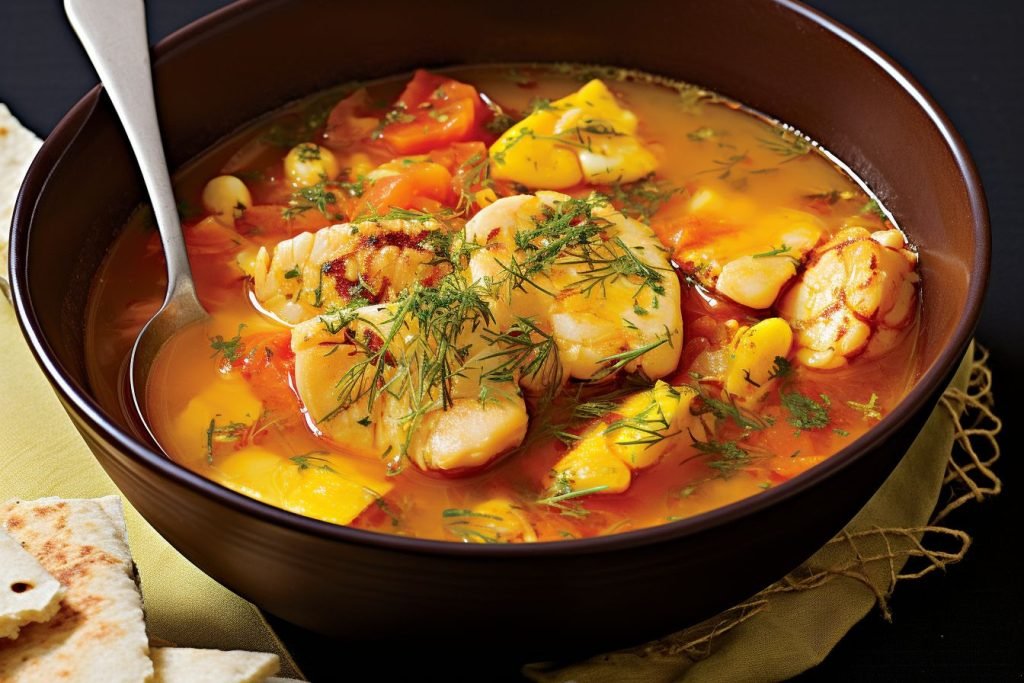
On a side note, this dip is a perfect pairing with saffron fish stew.
Get its recipe now (by clicking the image below):