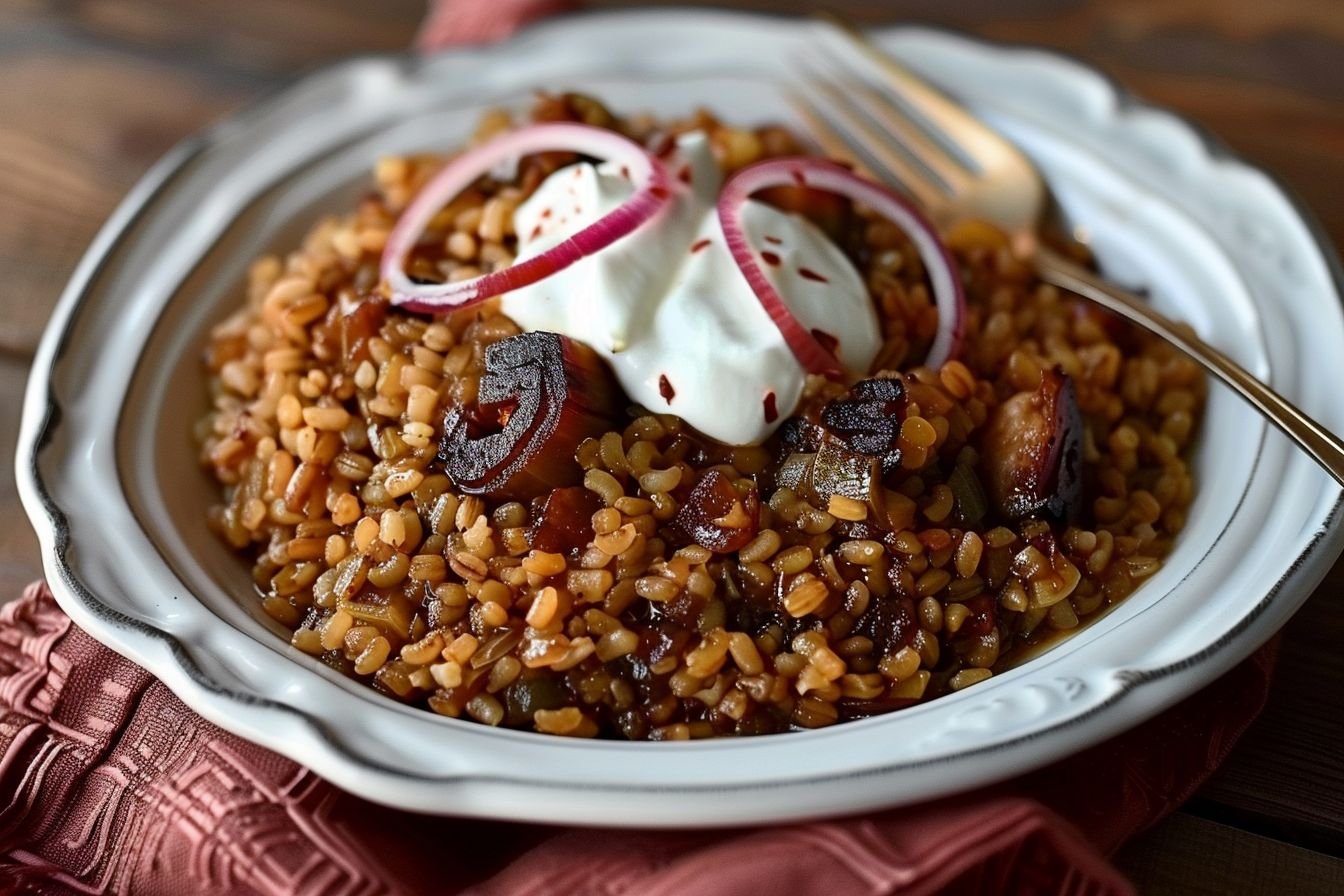
Mujadara with cracked wheat recipe is a recipe for a wholesome and flavorful combination of lentils, onions, and cracked wheat that is perfect for a hearty meal.
To make this dish, you will need small, whole brown lentils, neutral oil, diced yellow onion, cracked wheat, and salt and pepper. The dish is garnished with a drizzle of extra virgin olive oil, which adds a nice touch of flavor to the final dish.
This is a great option for those who are looking for a healthy and satisfying meal. The dish is packed with protein and fiber, making it a great option for vegetarians and vegans. Plus, it’s easy to make and can be served as a main course or a side dish.
History of Mujadara
Origins
As a dish that has been around for centuries, the exact origin of mujadara is unknown. However, it is believed to have originated in the Middle East, specifically in Lebanon and Syria. It is a simple dish made with lentils, rice, and caramelized onions, and is known for its affordability and nutritional value.
Cultural Significance
Mujadara has a significant cultural significance in the Middle East. It is often served during Lent, as it is a meatless dish that is both filling and nutritious. It is considered a staple dish in many Middle Eastern countries and is often served during special occasions and family gatherings.
The dish has also gained popularity in other parts of the world, particularly in the Mediterranean and North Africa. It is often served with a side of yogurt or salad and can be enjoyed as a main dish or a side dish.
Ingredients:
- 1 cup of sorted and rinsed brown lentils
- 1/4 cup of vegetable oil
- 4 to 6 cups of diced yellow onion
- Salt and pepper to taste
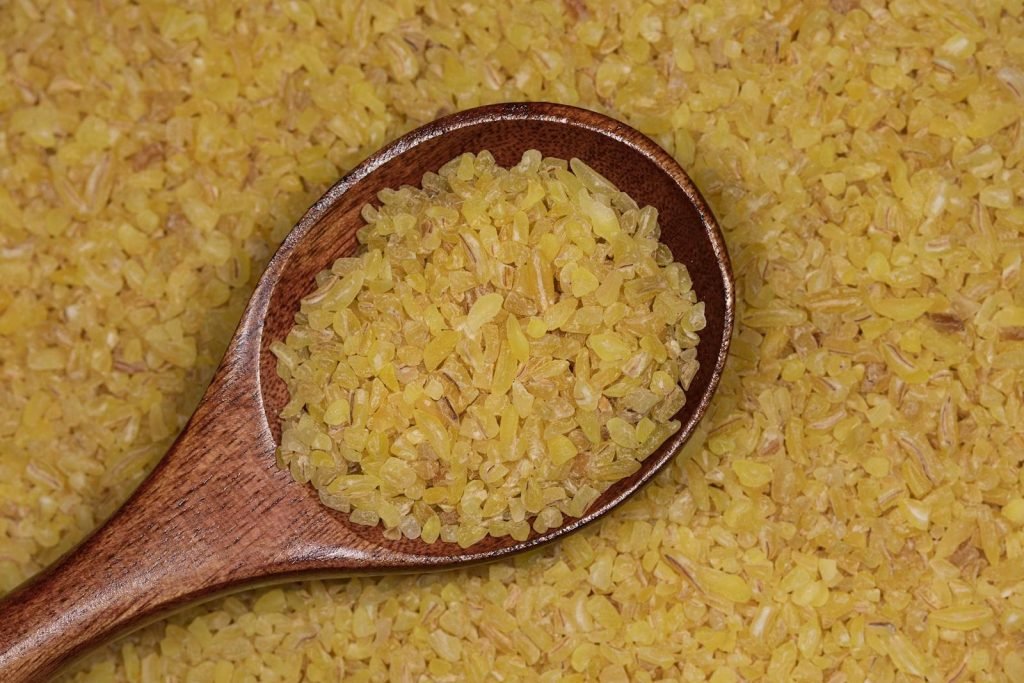
- 1 cup of cracked wheat (bulgur)
- Extra virgin olive oil for drizzling
How to Make Mujadara with Cracked Wheat?
Prepare the lentils:
- Thoroughly rinse the lentils to eliminate any impurities. Employ a fine-mesh strainer to facilitate this process.
- Meticulously examine the lentils and discard any foreign objects you may encounter.
- Combine the lentils with two cups of water and a pinch of salt in a suitable saucepan.
- Bring the mixture to a vigorous boil over high heat. Subsequently, reduce the heat and simmer for precisely seven minutes.
- Remove the saucepan from the heat and set it aside.
Caramelize the onions:
- Employ a substantial saucepan or frying pan equipped with a lid. Heat the vegetable oil over medium-high heat until it shimmers.
- Introduce the onions and cook them meticulously until they achieve a deep golden brown color, a process that typically requires approximately twenty minutes. To prevent burning, stir the onions frequently. However, be not dismayed by the presence of minor charring, as it contributes to the depth of flavor.
- While the onions are being cooked, sprinkle them with a pinch of salt to enhance their taste.
Simmer the onions in the infused water:
- Carefully pour two cups of water into the saucepan containing the caramelized onions.
- Increase the heat to bring the mixture to a boil. Subsequently, reduce the heat and simmer for five minutes, allowing the onions to further soften and release their essence into the water.
Combine and cook:
- Add the par-cooked lentils, along with their reserved cooking liquid, to the saucepan containing the onions.
- Introduce the cracked wheat or rice to the same vessel.
- Season the mixture with a measured amount of salt and pepper. It is advisable to begin with a conservative amount, as you can always adjust the seasoning to your preference later.
- Bring the entirety of the ingredients to a boil. Then, reduce the heat, cover the saucepan securely, and simmer for twenty minutes. The cooking process is complete when the liquid has been absorbed, and the rice or bulgur and lentils have achieved a cooked-through yet slightly firm texture, often described as “al dente.”
Savor your creation:
- Remove the saucepan from the heat source.
- Sample the mujadara to assess the seasoning, and make any necessary adjustments to the salt and pepper content.
- Finally, your delectable mujadara is now prepared to be enjoyed! You may serve it hot, warm, or at room temperature. Enhance the flavor with a drizzle of olive oil, and relish the delicious outcome of your culinary endeavors.
Serving Suggestions
Accompaniments
Mujadara can be served as a main dish or a side dish. To make it a complete meal, I like to pair it with some fresh vegetables or a salad. A simple cucumber and tomato salad with a lemon and olive oil dressing is a great option. You can also add some pickles, olives, or roasted vegetables to the plate.
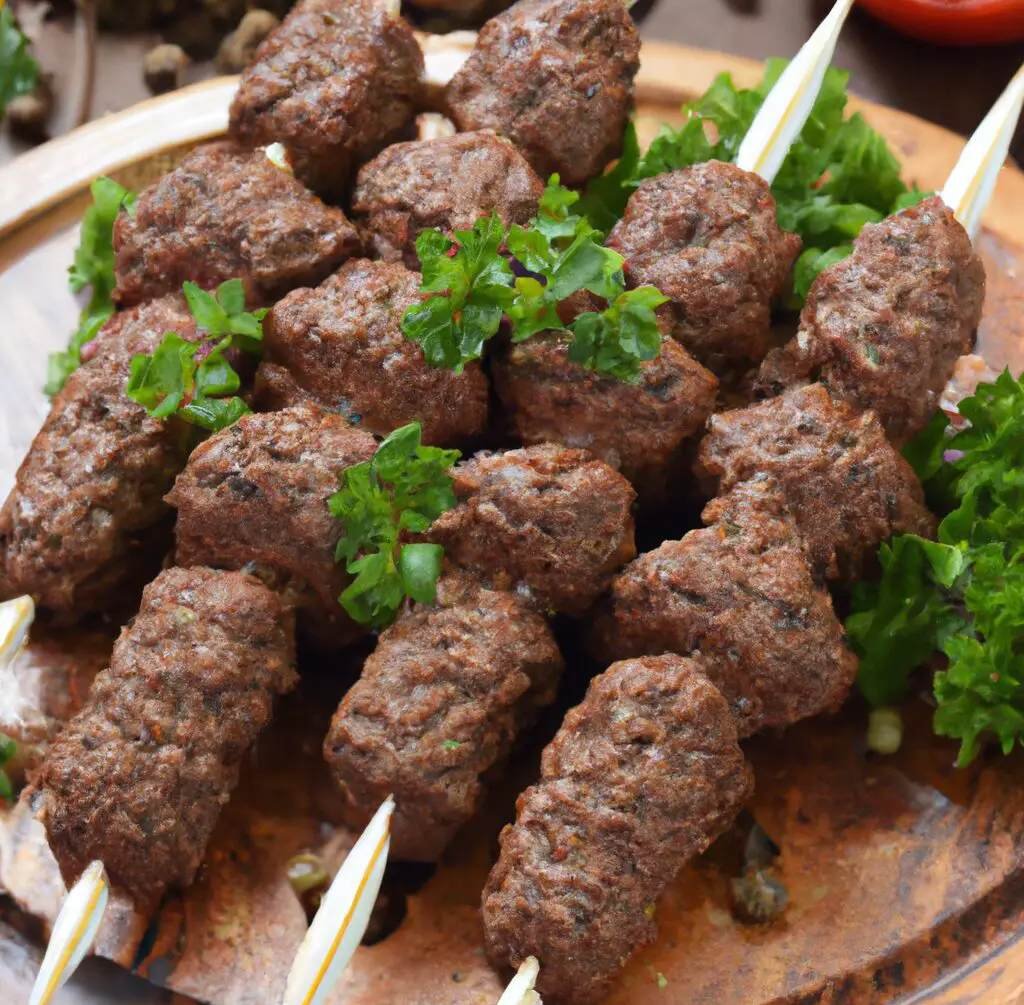
If you prefer a heartier meal, you can serve mujadara with some grilled meats or kebabs. Chicken, lamb, or beef would all work well. Alternatively, you can serve it with some yogurt or labneh on the side. The creamy texture of the yogurt complements the earthy flavors of the mujadara.
Garnishes
To add some color and texture to the dish, you can garnish the dish with various toppings. Some of my favorites include:
- Chopped fresh herbs, such as parsley, cilantro, or mint
- Sliced scallions or red onions
- Toasted pine nuts or almonds
- Pomegranate seeds or dried cranberries
- A drizzle of olive oil or balsamic vinegar
These toppings not only add visual appeal but also enhance the flavor and nutrition of the dish. Plus, they allow each person to customize their mujadara to their liking.
Nutritional Information
Here is the nutritional breakdown of this mujadara per serving:
- Calories: 320
- Total Fat: 8g
- Saturated Fat: 1g
- Cholesterol: 0mg
- Sodium: 400mg
- Total Carbohydrates: 53g
- Dietary Fiber: 11g
- Sugars: 7g
- Protein: 13g
As you can see, this is a great source of dietary fiber, which is essential for maintaining a healthy digestive system. It is also a good source of protein, making it a great option for vegetarians and vegans.
In addition, it is low in saturated fat and cholesterol, making it heart-healthy. It is also relatively low in calories, making it a great option for those who are watching their weight.
Storage and Reheating
Once you have made your mujadara, you may have leftovers that you want to store for later. Fortunately, this dish stores well and can be reheated easily. Here are some tips for storing and reheating your mujadara:
- Store leftover mujadara in an airtight container in the refrigerator for up to 3-4 days.
- If you want to freeze your mujadara, place it in a freezer-safe container and store it for up to 2-3 months.
- When reheating mujadara, you can use the microwave or stovetop. If using the microwave, cover the container with a damp paper towel to prevent the mujadara from drying out.
- To reheat on the stovetop, add a splash of water or vegetable broth to the mujadara to prevent it from sticking to the pan. Cook over medium heat, stirring occasionally, until heated through.
- You can also add some fresh herbs or a squeeze of lemon juice to brighten up the flavors when reheating.
Conclusion
Mujadara with cracked wheat recipe is a fantastic way to enjoy a delicious and nutritious meal. This recipe is easy to make and requires only a few ingredients. The cracked wheat adds a unique texture to the dish, and the spices used in the recipe make it flavorful and aromatic.
I highly recommend trying this recipe out if you’re looking for a healthy and filling meal that’s also budget-friendly. You can serve mujadara with a side of salad or vegetables to make it even more nutritious.
One of the best things about this recipe is that it can be customized to suit your taste preferences. You can adjust the amount of spices used in the recipe, or add additional ingredients such as chopped tomatoes or bell peppers to give it a different flavor.
Overall, I found this recipe to be a great addition to my meal rotation. It’s easy to make, delicious, and healthy, making it the perfect meal for busy weeknights or lazy weekends. Give it a try and see for yourself how delicious mujadara with cracked wheat can be!
As mentioned above, mujadara can be a great side dish for kebabs.
Get this recipe now (by clicking the image below):