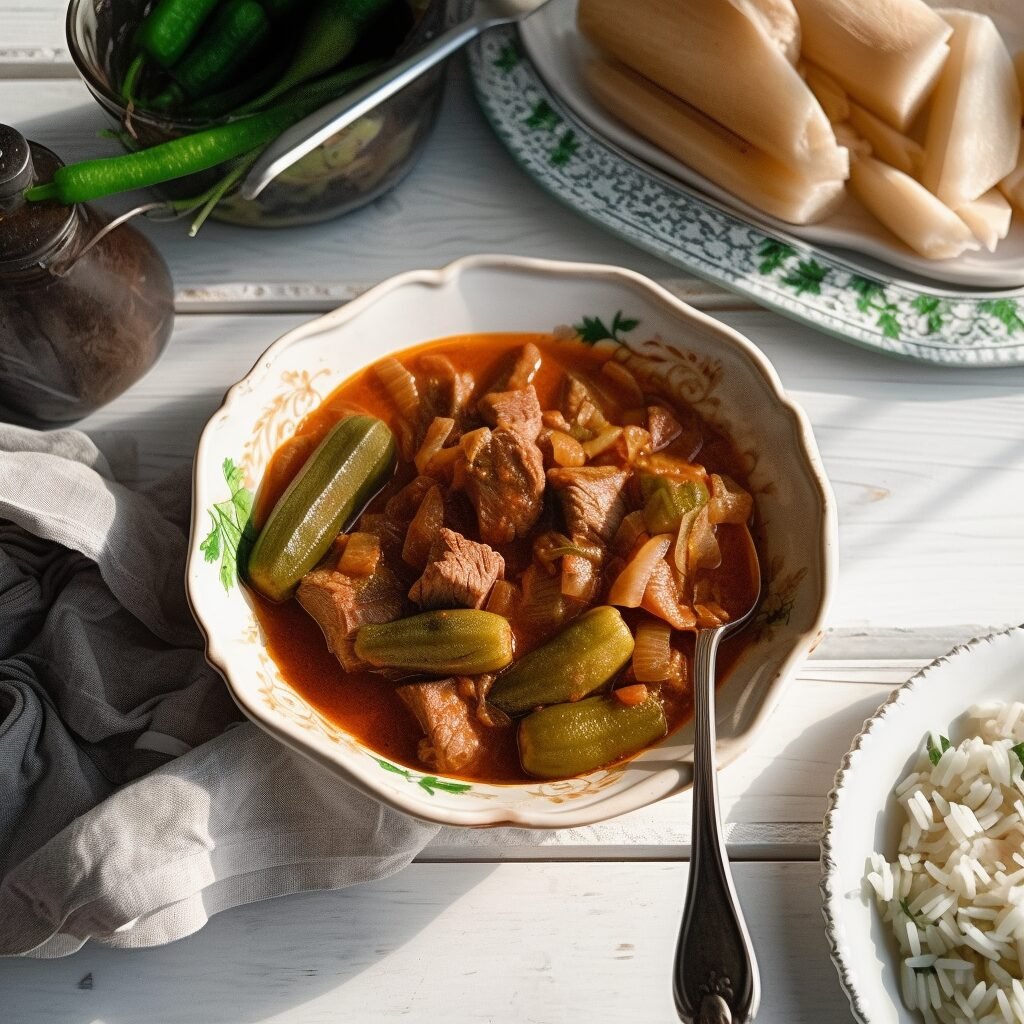
Join me on a culinary adventure to a Middle Eastern restaurant in Wisconsin. There, chaos and hospitality collide in a night I won’t forget. Experience the tantalizing Middle Eastern okra stew with tomatoes that will transport your taste buds to another world. Discover how food connects cultures and creates cherished memories through this flavorful journey. And don’t forget to unlock the recipe for this unforgettable dish that will have you craving more!
The evening I spent at the Middle Eastern restaurant in Madison, Wisconsin, was one of the most memorable experiences of my life. It perfectly shows how food can unite people, even in unexpected circumstances.
My family and I had planned on visiting this restaurant for a while. And we finally had the chance to go there on a rainy evening. As we walked into the restaurant, a warm and inviting atmosphere greeted us. It immediately made us feel at home.
The restaurant was bustling with customers, and the aroma of the food was tantalizing. An elderly Lebanese man promptly welcomed us. He introduced himself as the chef and owner of the restaurant. He seemed rushed as he ran back and forth to the kitchen to attend to the customers’ orders.
We perused through the menu and noticed a range of traditional Middle Eastern dishes, including hummus, tabbouleh, falafel, and shawarma. We ordered the Middle Eastern okra stew with tomatoes as a side dish, which the waiter recommended.
While waiting for our food to arrive, we noticed that the rainstorm outside got more intense. We could hear water droplets falling from the restaurant’s roof. Some customers were trying to dodge the water droplets. However, the staff quickly sprung into action and began moving the tables away from the affected areas.
Amidst the chaos, we noticed that the chef was trying to fix the leak himself, even though he was getting wet. He climbed onto a ladder with a bucket and attempted to fix the leak. Consequently, it seems that his effort provided a temporary solution.
To our surprise, he continued to cook our food despite the chaos around him. When the okra stew finally arrived, the aroma and the flavor blew us away. He cooked the stew to perfection, and the tomatoes gave it a tangy taste that complemented the okra perfectly.
The chef’s determination and ability to remain calm and composed in a difficult situation impressed us. As we finished our meal, I couldn’t resist asking the chef for the recipe for the stew.
To my surprise, he agreed to give me the recipe. However, he asked me a few questions about my interest in Middle Eastern cuisine before doing so. He seemed delighted that I was genuinely interested in his culture and the food he cooked.
He wrote down the recipe on paper, which I still have. It’s a treasured possession, and every time I cook the okra stew, it takes me back to that memorable evening in the Middle Eastern restaurant in Madison, Wisconsin.
But the story doesn’t end there. As we were about to leave the restaurant, the chef approached our table and invited us to sit with him for a while. He wanted to share more about his culture, cuisine, and life.
We sat with him and listened intently as he shared his experiences of growing up in Lebanon, his journey to the United States, and his love for cooking. He showed us pictures of his family and homeland, and we could see the pride in his eyes as he talked about his heritage.
It was a beautiful moment of connection and understanding, and we left the restaurant feeling grateful for the experience. We tasted delicious food and gained a new perspective on life and culture.
Reflecting on that evening, I realize it was a perfect example of food’s power to unite people. Despite the language and cultural barriers, we could connect and share a beautiful moment of understanding.
The Middle Eastern okra stew with tomatoes that we had that evening has become a staple dish in our family, and I make it often, especially when I want to feel closer to the culture and memories of that evening. Every time I make it, I remember the warm hospitality and generosity of the chef. It brings a smile to my face.
To sum up, the evening I spent at the Middle Eastern restaurant in Madison, Wisconsin, was not just about the food but the experience and connection it brought. I will always cherish the Middle Eastern okra stew with tomatoes that we had that evening. I am grateful for the recipe and the opportunity to connect with the chef on a deeper level. It was a beautiful reminder of food’s power to unite people and a memory I will always hold dear.
Here is how I created the Middle Eastern okra stew with tomatoes in my kitchen.
Ingredients:
- 800 grams of frozen small okra
- 500 grams of veal, cubed
- 3 tablespoons of vegetable oil
- 1 piece of onion
- 8 cloves of garlic
- 5.5 tablespoons of tomato paste
- 1.5 tablespoons of pomegranate molasses
- 1.5 teaspoon of salt
- 1/2 teaspoon of black pepper
- 15 cups of water
How to create Middle Eastern okra stew with tomatoes?

- In a stock pot, combine an onion that has been finely diced, vegetable oil, and ½ teaspoon of salt to make this tasty stew. Cook the onion until translucent by heating it in a pan for 2 to 3 minutes. Wash the veal, and season with salt and black pepper (at ½ teaspoon each).
- Add the veal to the pot and brown it on all sides for about 5 minutes to seal the juices and give them a nice flavor. Cook the tomato paste for a few more minutes to add a richer flavor to the stew. This will not only enhance the flavor, but it will also give it an unforgettable, delicious taste.
- Add the okra, garlic (chopped roughly), pomegranate molasses, and half a teaspoon of salt to the pot. Including pomegranate molasses in the dish is highly recommended since it adds a tangy flavor, though you can skip it if desired. Bring the 10 cups of water to a rolling boil on medium heat, stirring occasionally, and let it do so for around 30 minutes.
- After 30 minutes, check the okra and meat for tenderness. If they are still slightly firm, add additional water (4-5 cups) to the pot and allow it to continue boiling for 20 minutes. The perfect way to cook okra and meat is by softening them first. To ensure this, it’s recommended that you use a simmering technique.
- To ensure that all the ingredients are cooked through and tender, it is vital to pay attention to proper cooking times. Appropriate measures are necessary to guarantee the desired texture for a quality outcome.
- Once the meat and okra are cooked, taste the stew to ensure it is seasoned correctly and, if necessary, adjust with added salt or pepper. When all the flavors are balanced to your preference, turn off the heat and serve hot alongside rice or bread.
So what are you waiting for? Give this Middle Eastern okra stew with tomatoes a try and discover the mouth-watering flavors and health benefits it offers. Not only is it a great way to spice up your meal routine, but it’s also a fantastic way to incorporate nutrient-rich ingredients into your diet. Whether you’re a fan of Middle Eastern cuisine or simply looking to expand your culinary horizons, this dish will impress. So gather your ingredients, roll up your sleeves, and get ready to experience a truly unforgettable flavor journey. Trust me, your taste buds (and your loved ones) will thank you for it!